Agnolini: Difference between revisions
CSV import |
CSV import |
||
| Line 40: | Line 40: | ||
[[Category:Pasta]] | [[Category:Pasta]] | ||
[[Category:Stuffed dishes]] | [[Category:Stuffed dishes]] | ||
<gallery> | |||
File:Agnolini_mantovani.jpg|Agnolini mantovani | |||
File:Arte_di_ben_cucinare.jpg|Arte di ben cucinare | |||
</gallery> | |||
Latest revision as of 01:45, 17 February 2025
Italian stuffed pasta
Agnolini are a type of stuffed pasta originating from the Lombardy region in Italy. They are similar to tortellini and are traditionally served in broth. Agnolini are a staple in the Mantua area and are often enjoyed during festive occasions.
History[edit]
The origins of agnolini can be traced back to the culinary traditions of the Renaissance period in Italy. The dish is believed to have been influenced by the court cuisine of the Gonzaga family, who ruled Mantua during this time. Agnolini were considered a delicacy and were often prepared for nobility and special events.
Preparation[edit]
Agnolini are made by filling small squares of pasta dough with a mixture of meat, cheese, and spices. The filling typically includes pork, beef, or a combination of meats, along with Parmesan cheese and nutmeg. The pasta is then folded and sealed to form a small, rounded shape.
Dough[edit]
The dough for agnolini is made from flour and eggs, which are kneaded together to form a smooth, elastic texture. The dough is rolled out thinly before being cut into small squares.
Filling[edit]
The filling is prepared by finely mincing the meat and mixing it with grated Parmesan cheese, nutmeg, and sometimes breadcrumbs to achieve the desired consistency. The mixture is seasoned with salt and pepper to taste.
Assembly[edit]
To assemble agnolini, a small amount of filling is placed in the center of each pasta square. The edges of the dough are then folded over the filling and pressed together to seal the pasta. The agnolini are shaped into a rounded form, ensuring that no air is trapped inside.
Serving[edit]
Agnolini are traditionally served in a rich broth, often made from beef or chicken. The broth enhances the flavor of the pasta and provides a comforting, warming dish. Agnolini can also be served with a light sauce or butter and sage.
Cultural Significance[edit]
In the Mantua region, agnolini are a symbol of hospitality and celebration. They are commonly prepared for Christmas and other festive occasions, where families gather to enjoy this traditional dish. The preparation of agnolini is often a communal activity, with family members working together to create the pasta.
Related pages[edit]
Gallery[edit]
-
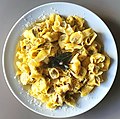 Agnolini served in broth
 -
 Historical depiction of pasta preparation


-
Agnolini mantovani
-
Arte di ben cucinare
