Income statement: Difference between revisions
CSV import Tags: mobile edit mobile web edit |
CSV import Tags: mobile edit mobile web edit |
||
| Line 35: | Line 35: | ||
[[Category:Financial Statements]] | [[Category:Financial Statements]] | ||
{{Accounting-stub}} | {{Accounting-stub}} | ||
= Income statement = | |||
<gallery> | |||
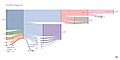
File:Sankey_Diagram_-_Income_Statement.jpg|Sankey Diagram - Income Statement | |||
</gallery> | |||
Latest revision as of 21:57, 16 February 2025
Income statement (also known as the profit and loss statement, P&L, statement of profit or loss, revenue statement, statement of financial performance, earnings statement, operating statement, or statement of operations) is one of the three important financial statements used by accountants and business owners (the other two are balance sheet and cash flow statement). It is used to illustrate a company's revenues and expenses during a particular period.
Overview[edit]
The income statement provides information about the financial performance of a company over a specific reporting period. It indicates how the revenues (money received from the sale of products and services before expenses are taken out, also known as the “top line”) are transformed into the net income (the result after all revenues and expenses have been accounted for, also known as “net profit” or the “bottom line”).
Structure[edit]
The income statement is divided into two parts: the operating section, and the non-operating section.
Operating Section[edit]
The operating section is related to the regular business operations of the company. It includes the following components:
- Sales Revenue: The income that a business has from its normal business activities, usually from the sale of goods and services to customers.
- COGS: The direct costs attributable to the production of the goods sold by a company.
- Operating Expenses: Expenses a business incurs through its normal business operations.
Non-Operating Section[edit]
The non-operating section includes revenues and gains from non-primary business activities, items that are either unusual or infrequent, finance costs like interest expense, and income tax expense.
Importance[edit]
The income statement is important to both internal and external users. Internal users like management use the income statement to make decisions related to the company. External users like investors and creditors use the income statement to make decisions about investing in or lending to the company.
See Also[edit]

Income statement[edit]
-
 Sankey Diagram - Income Statement

