Arkansas Department of Health: Difference between revisions
CSV import |
CSV import |
||
| Line 1: | Line 1: | ||
== Apium graveolens == | |||
[[File:2023-06-22_Apium_graveolens_(Wild_Celery),_Elswick,_Northumberland_4.jpg|thumb|Wild celery in Northumberland]] | |||
'''Apium graveolens''' is a species in the family [[Apiaceae]] commonly known as celery. It is a biennial plant that is cultivated for its stalks, leaves, and seeds. Celery is a staple in many cuisines around the world and is known for its crisp texture and distinctive flavor. | |||
== | == Description == | ||
Apium graveolens is a herbaceous plant that can grow up to 1 meter in height. It has a long, fibrous stalk that tapers into leaves. The leaves are pinnate with rhombic leaflets. The plant produces small, white flowers in dense umbels. The seeds are small, brown, and ridged. | |||
== | == Varieties == | ||
There are several varieties of Apium graveolens, each with distinct characteristics: | |||
* '''Apium graveolens var. dulce''' - Commonly known as stalk celery, this variety is cultivated for its thick, crunchy stalks. It is often used in salads, soups, and as a snack. | |||
* '''Apium graveolens var. rapaceum''' - Known as celeriac or turnip-rooted celery, this variety is grown for its large, bulbous root. It is used in soups, stews, and purees. | |||
* '''Apium graveolens var. secalinum''' - Also known as leaf celery or cutting celery, this variety is grown for its aromatic leaves, which are used as a herb. | |||
== Cultivation == | |||
Celery requires a long growing season and is typically grown in temperate climates. It prefers rich, well-drained soil and requires consistent moisture. Celery is often started indoors and transplanted outdoors after the last frost. It is sensitive to temperature fluctuations and requires careful management to prevent bolting. | |||
== Uses == | |||
Celery is used in a variety of culinary applications. The stalks are eaten raw or cooked, and are a common ingredient in salads, soups, and stews. The leaves can be used as a herb, and the seeds are used as a spice, often in pickling and as a flavoring in soups and stews. | |||
== Nutritional Value == | |||
Celery is low in calories and is a good source of dietary fiber. It contains vitamins A, C, and K, as well as folate and potassium. Celery is also known for its high water content, making it a hydrating food. | |||
== Health Benefits == | |||
Celery is believed to have several health benefits, including anti-inflammatory properties and the ability to lower blood pressure. It is also thought to aid in digestion and support weight loss due to its low calorie content. | |||
== Related Pages == | |||
* [[Apiaceae]] | |||
* [[Celeriac]] | |||
* [[Herb]] | |||
* [[Vegetable]] | |||
== Gallery == | |||
<gallery> | |||
File:Bleekselderij_groen_(Apium_graveolens_var._dulce_green).jpg|Green stalk celery | |||
File:Tselina.png|Celeriac root | |||
File:Céleri_à_couper0405.jpg|Leaf celery | |||
</gallery> | |||
[[Category:Apiaceae]] | |||
[[Category:Leaf vegetables]] | |||
[[Category:Root vegetables]] | |||
Revision as of 17:35, 11 February 2025
Apium graveolens
,_Elswick,_Northumberland_4.jpg)
Apium graveolens is a species in the family Apiaceae commonly known as celery. It is a biennial plant that is cultivated for its stalks, leaves, and seeds. Celery is a staple in many cuisines around the world and is known for its crisp texture and distinctive flavor.
Description
Apium graveolens is a herbaceous plant that can grow up to 1 meter in height. It has a long, fibrous stalk that tapers into leaves. The leaves are pinnate with rhombic leaflets. The plant produces small, white flowers in dense umbels. The seeds are small, brown, and ridged.
Varieties
There are several varieties of Apium graveolens, each with distinct characteristics:
- Apium graveolens var. dulce - Commonly known as stalk celery, this variety is cultivated for its thick, crunchy stalks. It is often used in salads, soups, and as a snack.
- Apium graveolens var. rapaceum - Known as celeriac or turnip-rooted celery, this variety is grown for its large, bulbous root. It is used in soups, stews, and purees.
- Apium graveolens var. secalinum - Also known as leaf celery or cutting celery, this variety is grown for its aromatic leaves, which are used as a herb.
Cultivation
Celery requires a long growing season and is typically grown in temperate climates. It prefers rich, well-drained soil and requires consistent moisture. Celery is often started indoors and transplanted outdoors after the last frost. It is sensitive to temperature fluctuations and requires careful management to prevent bolting.
Uses
Celery is used in a variety of culinary applications. The stalks are eaten raw or cooked, and are a common ingredient in salads, soups, and stews. The leaves can be used as a herb, and the seeds are used as a spice, often in pickling and as a flavoring in soups and stews.
Nutritional Value
Celery is low in calories and is a good source of dietary fiber. It contains vitamins A, C, and K, as well as folate and potassium. Celery is also known for its high water content, making it a hydrating food.
Health Benefits
Celery is believed to have several health benefits, including anti-inflammatory properties and the ability to lower blood pressure. It is also thought to aid in digestion and support weight loss due to its low calorie content.
Related Pages
Gallery
-
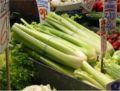 Green stalk celery
 -
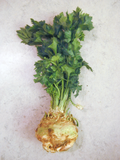 Celeriac root
 -
 Leaf celery
.jpg)


