Trachea: Difference between revisions
CSV import Tags: mobile edit mobile web edit |
CSV import |
||
| Line 1: | Line 1: | ||
== Trachea == | |||
The '''trachea''', | The '''trachea''', commonly known as the windpipe, is a vital part of the respiratory system in humans and many other animals. It is a tube that connects the [[larynx]] to the [[bronchi]] of the lungs, allowing the passage of air. The trachea is an essential component of the body's airway and plays a crucial role in respiration. | ||
==Structure== | == Structure == | ||
The trachea is | The trachea is approximately 10 to 12 centimeters long and 2 centimeters in diameter in adults. It is composed of 16 to 20 C-shaped rings of [[hyaline cartilage]] that provide structural support and maintain an open airway. The open part of the C-shaped rings faces posteriorly, towards the [[esophagus]], allowing the trachea to expand slightly during swallowing. | ||
The inner lining of the trachea is made up of [[ciliated pseudostratified columnar epithelium]], which contains [[goblet cells]] that secrete mucus. This mucus traps inhaled particles, and the cilia move the mucus upwards towards the [[pharynx]] where it can be swallowed or expelled. | |||
== Function == | |||
The primary function of the trachea is to provide a clear airway for air to enter and exit the lungs. It also helps to warm, moisten, and filter the air before it reaches the lungs. The trachea's cilia and mucus play a critical role in trapping and expelling foreign particles and pathogens. | |||
== Clinical significance == | |||
== | The trachea can be affected by various medical conditions, including: | ||
* [[ | |||
* '''[[Tracheitis]]''': Inflammation of the trachea, often due to infection. | |||
* '''[[Tracheal stenosis]]''': Narrowing of the trachea, which can be congenital or acquired. | |||
* '''[[Tracheomalacia]]''': Weakness of the tracheal walls, leading to collapse during breathing. | |||
* '''[[Tracheoesophageal fistula]]''': An abnormal connection between the trachea and the esophagus. | |||
== Related pages == | |||
* [[Respiratory system]] | |||
* [[Larynx]] | * [[Larynx]] | ||
* [[ | * [[Bronchi]] | ||
* [[ | * [[Esophagus]] | ||
== | == Gallery == | ||
<gallery> | |||
File:Illu_conducting_passages.svg|Diagram of the conducting passages of the respiratory system. | |||
File:Blausen_0865_TracheaAnatomy.png|Anatomy of the trachea. | |||
File:CT-Thorax-5.0-B70f.ogg|CT scan of the thorax. | |||
File:COR-2-STND-CHEST.ogg|Standard chest CT scan. | |||
File:COR-2-STND-CHEST-MEDIASTINUM.ogg|Chest CT scan showing the mediastinum. | |||
File:Cross_section_of_a_trachea_and_esophagus.svg|Cross-section of the trachea and esophagus. | |||
File:Sternohyoid_muscle.PNG|Sternohyoid muscle related to the trachea. | |||
File:Blausen_0534_Goiter.png|Goiter affecting the trachea. | |||
File:Gray622.png|Gray's anatomy illustration of the trachea. | |||
File:Gray964.png|Another Gray's anatomy illustration. | |||
File:2308_The_Trachea-b.jpg|Detailed image of the trachea. | |||
File:Cartilage01.JPG|Tracheal cartilage. | |||
File:Stridor_NP_OGG_2.ogg|Audio of stridor, a sound associated with tracheal obstruction. | |||
File:Tracheal_diverticulum.png|Tracheal diverticulum. | |||
File:Tracheal_system_of_dissected_cockroach.tif|Tracheal system in a cockroach. | |||
File:Cockroach_tracheae_supplying_crop.tiff|Tracheae in a cockroach. | |||
File:Trachea_(mammal)_histology_cross-section.png|Histology of a mammalian trachea. | |||
File:Trachea_(mammal)_histology_cross-section_low_mag.png|Low magnification histology of a mammalian trachea. | |||
File:Larynx_detailed.jpg|Detailed image of the larynx. | |||
File:Gray954.png|Gray's anatomy illustration of the larynx and trachea. | |||
File:3d-vh-m-trachea.stl|3D model of the trachea. | |||
</gallery> | |||
[[Category:Respiratory system]] | [[Category:Respiratory system]] | ||
Latest revision as of 01:17, 10 February 2025
Trachea[edit]
The trachea, commonly known as the windpipe, is a vital part of the respiratory system in humans and many other animals. It is a tube that connects the larynx to the bronchi of the lungs, allowing the passage of air. The trachea is an essential component of the body's airway and plays a crucial role in respiration.
Structure[edit]
The trachea is approximately 10 to 12 centimeters long and 2 centimeters in diameter in adults. It is composed of 16 to 20 C-shaped rings of hyaline cartilage that provide structural support and maintain an open airway. The open part of the C-shaped rings faces posteriorly, towards the esophagus, allowing the trachea to expand slightly during swallowing.
The inner lining of the trachea is made up of ciliated pseudostratified columnar epithelium, which contains goblet cells that secrete mucus. This mucus traps inhaled particles, and the cilia move the mucus upwards towards the pharynx where it can be swallowed or expelled.
Function[edit]
The primary function of the trachea is to provide a clear airway for air to enter and exit the lungs. It also helps to warm, moisten, and filter the air before it reaches the lungs. The trachea's cilia and mucus play a critical role in trapping and expelling foreign particles and pathogens.
Clinical significance[edit]
The trachea can be affected by various medical conditions, including:
- Tracheitis: Inflammation of the trachea, often due to infection.
- Tracheal stenosis: Narrowing of the trachea, which can be congenital or acquired.
- Tracheomalacia: Weakness of the tracheal walls, leading to collapse during breathing.
- Tracheoesophageal fistula: An abnormal connection between the trachea and the esophagus.
Related pages[edit]
Gallery[edit]
-
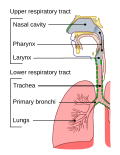 Diagram of the conducting passages of the respiratory system.
 -
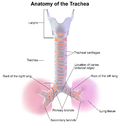 Anatomy of the trachea.
 -
 CT scan of the thorax.
 -
 Standard chest CT scan.
 -
 Chest CT scan showing the mediastinum.
 -
 Cross-section of the trachea and esophagus.
 -
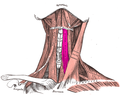 Sternohyoid muscle related to the trachea.
 -
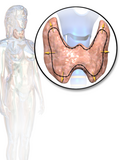 Goiter affecting the trachea.
 -
 Gray's anatomy illustration of the trachea.
 -
 Another Gray's anatomy illustration.
 -
 Detailed image of the trachea.
 -
 Tracheal cartilage.
 -
Audio of stridor, a sound associated with tracheal obstruction.
-
 Tracheal diverticulum.
 -
 Tracheal system in a cockroach.
 -
 Tracheae in a cockroach.
 -
 Histology of a mammalian trachea.
 -
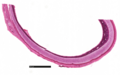 Low magnification histology of a mammalian trachea.
 -
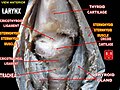 Detailed image of the larynx.
 -
 Gray's anatomy illustration of the larynx and trachea.
 -
 3D model of the trachea.


_histology_cross-section.png)
_histology_cross-section_low_mag.png)


