Tumpeng: Difference between revisions
CSV import |
CSV import |
||
| Line 1: | Line 1: | ||
{{short description|Indonesian cone-shaped rice dish}} | |||
{{Use dmy dates|date=October 2023}} | |||
'''Tumpeng''' is a traditional [[Indonesian cuisine|Indonesian dish]] that features a cone-shaped mound of [[rice]], often yellow in color, surrounded by an assortment of side dishes. It is commonly associated with celebratory events and is considered a symbol of gratitude and prosperity. | |||
The origins of | ==History== | ||
The origins of tumpeng can be traced back to ancient [[Javanese culture]], where it was used in traditional ceremonies and rituals. The cone shape of the rice is said to represent the holy [[Mount Meru]], a sacred mountain in [[Hindu]] and [[Buddhist]] cosmology. Over time, tumpeng has become a staple in various cultural celebrations across Indonesia, including birthdays, weddings, and other significant life events. | |||
== Preparation == | ==Preparation== | ||
Tumpeng is typically made using [[rice]] that is cooked with [[turmeric]] to give it a distinctive yellow color, symbolizing gold and wealth. The rice is then shaped into a cone using a special mold. Surrounding the rice are various side dishes, which can include [[fried chicken]], [[tempeh]], [[tofu]], [[vegetables]], and [[sambal]]. Each side dish is carefully selected to provide a balance of flavors and textures. | |||
==Cultural significance== | |||
In Indonesian culture, tumpeng is more than just a dish; it is a symbol of harmony and unity. The act of cutting the top of the tumpeng is often performed by the most respected person at the event, signifying the sharing of blessings and good fortune. Tumpeng is also used in the "tumpengan" ceremony, which is a communal meal that fosters togetherness and community spirit. | |||
==Variations== | |||
There are several regional variations of tumpeng across Indonesia. In [[Central Java]], tumpeng is often served with a side of [[gudeg]], a sweet jackfruit stew. In [[East Java]], it might be accompanied by [[rawon]], a beef stew with a rich, black broth. Each region adds its own unique touch to the dish, reflecting local tastes and ingredients. | |||
== | ==Gallery== | ||
<gallery> | |||
File:Tumpeng-Jawa.jpg|A traditional Javanese tumpeng | |||
File:Tumpeng.jpg|Tumpeng with various side dishes | |||
File:Tumpeng_hias_.jpg|Decoratively arranged tumpeng | |||
File:Tumpeng_Feast.JPG|Tumpeng served at a feast | |||
</gallery> | |||
==Related pages== | |||
* [[Indonesian cuisine]] | |||
* [[Nasi kuning]] | |||
* [[Javanese culture]] | |||
== | |||
== | ==References== | ||
* "Tumpeng: A Symbol of Gratitude and Prosperity." Indonesian Culinary Heritage. Retrieved from [https://www.indonesianculinaryheritage.org/tumpeng] | |||
* | * "The Cultural Significance of Tumpeng in Indonesian Celebrations." Journal of Southeast Asian Studies. Retrieved from [https://www.journalofseasianstudies.org/tumpeng] | ||
* [ | |||
[[Category:Indonesian cuisine]] | [[Category:Indonesian cuisine]] | ||
[[Category:Rice dishes]] | [[Category:Rice dishes]] | ||
[[Category:Festivals in Indonesia]] | |||
Revision as of 23:55, 9 February 2025
Indonesian cone-shaped rice dish
Tumpeng is a traditional Indonesian dish that features a cone-shaped mound of rice, often yellow in color, surrounded by an assortment of side dishes. It is commonly associated with celebratory events and is considered a symbol of gratitude and prosperity.
History
The origins of tumpeng can be traced back to ancient Javanese culture, where it was used in traditional ceremonies and rituals. The cone shape of the rice is said to represent the holy Mount Meru, a sacred mountain in Hindu and Buddhist cosmology. Over time, tumpeng has become a staple in various cultural celebrations across Indonesia, including birthdays, weddings, and other significant life events.
Preparation
Tumpeng is typically made using rice that is cooked with turmeric to give it a distinctive yellow color, symbolizing gold and wealth. The rice is then shaped into a cone using a special mold. Surrounding the rice are various side dishes, which can include fried chicken, tempeh, tofu, vegetables, and sambal. Each side dish is carefully selected to provide a balance of flavors and textures.
Cultural significance
In Indonesian culture, tumpeng is more than just a dish; it is a symbol of harmony and unity. The act of cutting the top of the tumpeng is often performed by the most respected person at the event, signifying the sharing of blessings and good fortune. Tumpeng is also used in the "tumpengan" ceremony, which is a communal meal that fosters togetherness and community spirit.
Variations
There are several regional variations of tumpeng across Indonesia. In Central Java, tumpeng is often served with a side of gudeg, a sweet jackfruit stew. In East Java, it might be accompanied by rawon, a beef stew with a rich, black broth. Each region adds its own unique touch to the dish, reflecting local tastes and ingredients.
Gallery
-
 A traditional Javanese tumpeng
 -
 Tumpeng with various side dishes
 -
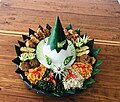 Decoratively arranged tumpeng
 -
 Tumpeng served at a feast


