Ancient grains: Difference between revisions
CSV import |
No edit summary |
||
| Line 1: | Line 1: | ||
{{Short description|Overview of ancient grains and their significance}} | {{Short description|Overview of ancient grains and their significance}} | ||
'''Ancient grains''' refer to a group of grains and pseudocereals that have remained largely unchanged over the last several hundred years. Unlike modern grains, which have been selectively bred for higher yields and other agricultural benefits, ancient grains are considered to be more nutritionally dense and are often touted for their health benefits. | '''Ancient grains''' refer to a group of grains and pseudocereals that have remained largely unchanged over the last several hundred years. Unlike modern grains, which have been selectively bred for higher yields and other agricultural benefits, ancient grains are considered to be more nutritionally dense and are often touted for their health benefits. | ||
| Line 12: | Line 9: | ||
==Types of Ancient Grains== | ==Types of Ancient Grains== | ||
There are several types of ancient grains, each with unique properties and uses: | There are several types of ancient grains, each with unique properties and uses: | ||
| Line 33: | Line 29: | ||
Incorporating ancient grains into the diet can have several health benefits, including improved digestion, better weight management, and reduced risk of chronic diseases such as [[heart disease]] and [[type 2 diabetes]]. Their high fiber content helps regulate blood sugar levels and supports cardiovascular health. | Incorporating ancient grains into the diet can have several health benefits, including improved digestion, better weight management, and reduced risk of chronic diseases such as [[heart disease]] and [[type 2 diabetes]]. Their high fiber content helps regulate blood sugar levels and supports cardiovascular health. | ||
== | == Gallery == | ||
Ancient grains | <gallery> | ||
File:Associations_of_wild_cereals_and_other_wild_grasses_in_northern_Israel.jpg|Ancient grains | |||
File:3836_-_Amaranthus_caudatus_(Zieramaranth).JPG|Amaranthus caudatus | |||
File:Sorghum.jpg|Sorghum | |||
File:Teff_pluim_Eragrostis_tef.jpg|Teff | |||
File:Finger_millet_3_11-21-02.jpg|Finger millet | |||
File:Landscape_with_Chenopodium_quinoa_Cachilaya_Bolivia_Lake_Titicaca.jpg|Chenopodium quinoa | |||
File:Triticum_turgidum_2.jpg|Triticum turgidum | |||
File:Japanese_Buckwheat_Flower.JPG|Japanese Buckwheat | |||
File:Avena_sativa_L.jpg|Avena sativa | |||
File:Salvia_hispanica_(10461546364).jpg|Salvia hispanica | |||
</gallery> | |||
==Related pages== | ==Related pages== | ||
* [[Whole grain]] | * [[Whole grain]] | ||
Latest revision as of 21:16, 18 February 2025
Overview of ancient grains and their significance
Ancient grains refer to a group of grains and pseudocereals that have remained largely unchanged over the last several hundred years. Unlike modern grains, which have been selectively bred for higher yields and other agricultural benefits, ancient grains are considered to be more nutritionally dense and are often touted for their health benefits.
Characteristics of Ancient Grains[edit]
Ancient grains are typically whole grains, meaning they contain all parts of the grain kernel: the bran, germ, and endosperm. This composition contributes to their high nutritional value, providing essential nutrients such as fiber, vitamins, and minerals.
Nutritional Benefits[edit]
Ancient grains are rich in dietary fiber, which aids in digestion and helps maintain a healthy weight. They also contain higher levels of protein compared to modern grains, making them an excellent choice for vegetarians and vegans. Additionally, they are a good source of antioxidants, which help protect the body from oxidative stress.
Types of Ancient Grains[edit]
There are several types of ancient grains, each with unique properties and uses:
Quinoa[edit]
Quinoa is a pseudocereal native to the Andean region of South America. It is known for its high protein content and is one of the few plant foods that contain all nine essential amino acids. Quinoa is also gluten-free, making it a popular choice for those with celiac disease or gluten intolerance.
Amaranth[edit]
Amaranth is another pseudocereal that was a staple food of the Aztecs. It is rich in protein, fiber, and micronutrients such as iron and magnesium. Amaranth can be used in a variety of dishes, from porridges to baked goods.
Farro[edit]
Farro is an ancient wheat grain that has been cultivated for thousands of years. It has a nutty flavor and chewy texture, making it a popular ingredient in salads and soups. Farro is high in fiber and contains a range of vitamins and minerals, including B vitamins and zinc.
Spelt[edit]
Spelt is a type of wheat that has been grown since the Bronze Age. It is known for its slightly sweet, nutty flavor and is often used in bread and pasta. Spelt is high in protein and fiber, and it contains a variety of essential nutrients.
Culinary Uses[edit]
Ancient grains can be used in a wide range of culinary applications. They can be cooked and served as a side dish, added to soups and stews, or ground into flour for baking. Their versatility and nutritional benefits make them a valuable addition to any diet.
Health Implications[edit]
Incorporating ancient grains into the diet can have several health benefits, including improved digestion, better weight management, and reduced risk of chronic diseases such as heart disease and type 2 diabetes. Their high fiber content helps regulate blood sugar levels and supports cardiovascular health.
Gallery[edit]
-
 Ancient grains
 -
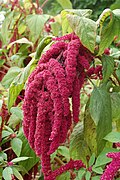 Amaranthus caudatus
 -
 Sorghum
 -
 Teff
Teff -
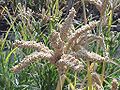 Finger millet
 -
 Chenopodium quinoa
 -
 Triticum turgidum
 -
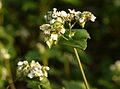 Japanese Buckwheat
 -
 Avena sativa
 -
 Salvia hispanica

.JPG)


.jpg)
