Wellington: Difference between revisions
CSV import |
CSV import |
||
| Line 58: | Line 58: | ||
File:Wellington,_New_Zealand.JPG|Wellington, New Zealand | File:Wellington,_New_Zealand.JPG|Wellington, New Zealand | ||
File:View_of_Wellington_from_Mt_Victoria_(10).jpg|View of Wellington from Mt Victoria | File:View_of_Wellington_from_Mt_Victoria_(10).jpg|View of Wellington from Mt Victoria | ||
</gallery> | |||
<gallery> | |||
File:Wellington Panorama View.jpg|Wellington Panorama View | |||
File:Seddon Statue in Parliament Grounds.jpg|Seddon Statue in Parliament Grounds | |||
File:Old Government Buildings, Wellington.JPG|Old Government Buildings, Wellington | |||
File:Wellington NZ7 3363 (cropped).jpg|Wellington | |||
File:PapaMuseumWellington.JPG|Papa Museum Wellington | |||
File:Historic Wellington Buildings.jpg|Historic Wellington Buildings | |||
File:Wellington Cable Car (20240206a) (53532605708).jpg|Wellington Cable Car | |||
File:Wellington.- Statue de Kupe Raiatea avec son épouse Te Aparangi (focus).jpg|Statue de Kupe Raiatea avec son épouse Te Aparangi | |||
File:Lambton Harbour, Wellington, New Zealand c 1840.jpg|Lambton Harbour, Wellington, New Zealand c 1840 | |||
File:Early Map of Wellington - Wellington County District (23530307892).jpg|Early Map of Wellington - Wellington County District | |||
File:Corner of Bowen Street and Lambton Quay, circa 1929.jpg|Corner of Bowen Street and Lambton Quay, circa 1929 | |||
File:Wellington, New Zealand.JPG|Wellington, New Zealand | |||
</gallery> | </gallery> | ||
Revision as of 01:25, 20 February 2025
Wellington is the capital city of New Zealand, and also the country's second most populous city. It is located at the south-western tip of the North Island, between Cook Strait and the Rimutaka Range. Wellington is the major population centre of the southern North Island, and is the administrative centre of the Wellington Region, which also includes the Kapiti Coast and Wairarapa.
History
Wellington was named in honour of Arthur Wellesley, 1st Duke of Wellington, the British soldier and statesman who was victorious at the Battle of Waterloo. The city's original Maori name, Te Upoko-o-te-Ika-a-Maui, translates as 'The Head of the Fish of Maui' - a reference to the southern North Island's shape, which resembles a fish.
Geography
Wellington is surrounded by hills and a rugged coastline, and boasts a stunning harbour. The city's central business district is sited close to Lambton Harbour, an arm of Wellington Harbour, which lies along an active geological fault known as the Wellington Fault. This fault line has shaped the city's landscape in many ways, with the central city having been built on reclaimed land due to the relative flatness of the original shoreline.
Economy
Wellington's economy is primarily service-based, with an emphasis on finance, business services, and government. It is the centre of New Zealand's film and special effects industries, and has a significant coffee culture. The city is home to the Reserve Bank of New Zealand, New Zealand Stock Exchange and major companies such as Datacom Group and Trade Me.
Culture
Wellington is New Zealand's centre of culture and the arts. It is home to the National Archives, the National Library, the Museum of New Zealand Te Papa Tongarewa, and numerous theatres. The city's vibrant arts scene includes a large number of festivals, including the Wellington International Arts Festival.
Education
Wellington is home to several of New Zealand's major educational institutions, including Victoria University of Wellington, Massey University's Wellington campus, and Wellington College.
Transport
Wellington has a compact city centre which is ideal for walking around. Public transport consists of buses, trains, ferries and a funicular, known as the Wellington Cable Car. The city's airport, Wellington International Airport, is the third busiest in New Zealand.
Wellington
-
 Wellington
 -
 Wellington
 -
 Wellington
 -
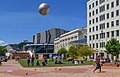 Wellington
 -
 Wellington
 -
 Wellington
 -
 Wellington
 -
 Wellington
 -
Wellington
-
Wellington
-
Wellington
-
Wellington


.jpg)


.jpg)

-
Wellington
-
Seddon Statue in Parliament Grounds
-
Old Government Buildings, Wellington
-
Wellington
-
Papa Museum Wellington
-
Historic Wellington Buildings
-
Statue de Kupe Raiatea avec son épouse Te Aparangi
-
Lambton Harbour, Wellington, New Zealand c 1840
-
Early Map of Wellington - Wellington County District
-
Corner of Bowen Street and Lambton Quay, circa 1929
-
Wellington, New Zealand
-
View of Wellington from Mt Victoria
-
Wellington Panorama View
-
Seddon Statue in Parliament Grounds
-
Old Government Buildings, Wellington
-
Wellington
-
Papa Museum Wellington
-
Historic Wellington Buildings
-
Wellington Cable Car
-
Statue de Kupe Raiatea avec son épouse Te Aparangi
-
Lambton Harbour, Wellington, New Zealand c 1840
-
Early Map of Wellington - Wellington County District
-
Corner of Bowen Street and Lambton Quay, circa 1929
-
Wellington, New Zealand


.jpg)


.jpg)
_(53532605708).jpg)