Failed back syndrome: Difference between revisions
CSV import |
CSV import |
||
| Line 1: | Line 1: | ||
{{SI}} | |||
{{Infobox medical condition | |||
| name = Failed back syndrome | |||
| image = [[File:SPINAL_SURGEONS.JPG|250px]] | |||
| caption = Surgeons performing spinal surgery | |||
| synonyms = Post-laminectomy syndrome | |||
| specialty = [[Neurosurgery]], [[Orthopedic surgery]] | |||
| symptoms = [[Chronic pain]], [[back pain]], [[leg pain]] | |||
| complications = [[Disability]], [[depression (mood)]], [[opioid dependence]] | |||
| onset = After [[spinal surgery]] | |||
| duration = Long-term | |||
| causes = [[Scar tissue]], [[nerve damage]], [[spinal instability]] | |||
| risks = Multiple surgeries, [[smoking]], [[obesity]] | |||
| diagnosis = [[Medical history]], [[physical examination]], [[imaging studies]] | |||
| differential = [[Recurrent disc herniation]], [[spinal stenosis]], [[neuropathy]] | |||
| prevention = Proper surgical technique, patient selection | |||
| treatment = [[Physical therapy]], [[pain management]], [[spinal cord stimulation]] | |||
| medication = [[Analgesics]], [[antidepressants]], [[anticonvulsants]] | |||
| prognosis = Variable, often chronic | |||
| frequency = Common in post-surgical patients | |||
}} | |||
'''Failed Back Surgery Syndrome''' (FBSS), also known as '''Failed Back Syndrome''' (FBS), is a condition characterized by persistent or new pain following spinal surgery. The term is somewhat misleading as it implies a syndrome specific to unsuccessful back surgeries; however, it encompasses a range of factors that can lead to suboptimal outcomes. These factors include but are not limited to residual or recurrent disc herniation, persistent post-operative pressure on a spinal nerve, altered joint mobility, joint hypermobility with instability, scar tissue (fibrosis), depression, anxiety, and spinal muscular deconditioning. | '''Failed Back Surgery Syndrome''' (FBSS), also known as '''Failed Back Syndrome''' (FBS), is a condition characterized by persistent or new pain following spinal surgery. The term is somewhat misleading as it implies a syndrome specific to unsuccessful back surgeries; however, it encompasses a range of factors that can lead to suboptimal outcomes. These factors include but are not limited to residual or recurrent disc herniation, persistent post-operative pressure on a spinal nerve, altered joint mobility, joint hypermobility with instability, scar tissue (fibrosis), depression, anxiety, and spinal muscular deconditioning. | ||
==Causes== | ==Causes== | ||
The causes of Failed Back Surgery Syndrome can be multifactorial, making diagnosis and treatment challenging. Common causes include: | The causes of Failed Back Surgery Syndrome can be multifactorial, making diagnosis and treatment challenging. Common causes include: | ||
* [[Residual or recurrent disc herniation]]: The original herniated disc may not have been completely removed, or a new herniation may occur. | * [[Residual or recurrent disc herniation]]: The original herniated disc may not have been completely removed, or a new herniation may occur. | ||
* [[Post-operative pressure on a spinal nerve]]: This can result from inadequate decompression of a nerve root. | * [[Post-operative pressure on a spinal nerve]]: This can result from inadequate decompression of a nerve root. | ||
| Line 11: | Line 30: | ||
* [[Spinal muscular deconditioning]]: Lack of exercise following surgery can weaken the muscles supporting the spine. | * [[Spinal muscular deconditioning]]: Lack of exercise following surgery can weaken the muscles supporting the spine. | ||
* [[Psychological factors]]: Depression, anxiety, and a negative outlook can influence the perception of pain and the outcome of surgery. | * [[Psychological factors]]: Depression, anxiety, and a negative outlook can influence the perception of pain and the outcome of surgery. | ||
==Symptoms== | ==Symptoms== | ||
Symptoms of FBSS include but are not limited to chronic pain in the back or neck, sharp or stabbing pain in the extremities, reduced mobility, and dependence on pain medications. The pain may be similar to the pre-surgery pain or may have different characteristics. | Symptoms of FBSS include but are not limited to chronic pain in the back or neck, sharp or stabbing pain in the extremities, reduced mobility, and dependence on pain medications. The pain may be similar to the pre-surgery pain or may have different characteristics. | ||
==Diagnosis== | ==Diagnosis== | ||
Diagnosing FBSS involves a comprehensive approach that includes medical history, physical examination, and imaging studies such as MRI or CT scans. It is crucial to rule out other causes of pain before attributing it to FBSS. | Diagnosing FBSS involves a comprehensive approach that includes medical history, physical examination, and imaging studies such as MRI or CT scans. It is crucial to rule out other causes of pain before attributing it to FBSS. | ||
==Treatment== | ==Treatment== | ||
Treatment of Failed Back Surgery Syndrome is complex and may involve: | Treatment of Failed Back Surgery Syndrome is complex and may involve: | ||
* [[Pain management]]: This can include medications, nerve blocks, and epidural steroid injections. | * [[Pain management]]: This can include medications, nerve blocks, and epidural steroid injections. | ||
* [[Physical therapy]]: A tailored exercise program can help improve mobility and strengthen the muscles supporting the spine. | * [[Physical therapy]]: A tailored exercise program can help improve mobility and strengthen the muscles supporting the spine. | ||
* [[Spinal cord stimulation]]: This involves the use of electrical impulses to relieve pain. | * [[Spinal cord stimulation]]: This involves the use of electrical impulses to relieve pain. | ||
* [[Reoperation]]: In some cases, another surgery may be necessary to address the underlying cause of pain. | * [[Reoperation]]: In some cases, another surgery may be necessary to address the underlying cause of pain. | ||
==Prevention== | ==Prevention== | ||
Preventing FBSS requires careful patient selection, accurate diagnosis of the underlying condition, and appropriate surgical technique. Patient education on the realistic outcomes of surgery and post-operative care is also crucial. | Preventing FBSS requires careful patient selection, accurate diagnosis of the underlying condition, and appropriate surgical technique. Patient education on the realistic outcomes of surgery and post-operative care is also crucial. | ||
==Gallery== | |||
<gallery> | |||
File:Spinal_stenosis_1.JPG|Spinal stenosis | |||
File:CT_LUMBAR_DISC_HERNATION.JPG|CT scan of lumbar disc herniation | |||
File:LAMINECTOMY_SCAR.JPG|Laminectomy scar | |||
File:ARACHNOIDITIS.JPG|Arachnoiditis | |||
File:CT_ARACHNOIDITIS.JPG|CT scan showing arachnoiditis | |||
File:CT_SCAN_DISC_HERNIATION.JPG|CT scan of disc herniation | |||
</gallery> | |||
==See also== | ==See also== | ||
* [[Spinal surgery]] | * [[Spinal surgery]] | ||
* [[Chronic pain]] | * [[Chronic pain]] | ||
* [[Pain management]] | * [[Pain management]] | ||
[[Category:Orthopedic surgery]] | [[Category:Orthopedic surgery]] | ||
[[Category:Neurosurgery]] | [[Category:Neurosurgery]] | ||
[[Category:Pain management]] | [[Category:Pain management]] | ||
[[Category:Syndromes]] | [[Category:Syndromes]] | ||
{{Medicine-stub}} | {{Medicine-stub}} | ||
Latest revision as of 01:57, 6 April 2025

Editor-In-Chief: Prab R Tumpati, MD
Obesity, Sleep & Internal medicine
Founder, WikiMD Wellnesspedia &
W8MD's medical weight loss NYC, sleep center NYC
Philadelphia medical weight loss and Philadelphia sleep clinics
| Failed back syndrome | |
|---|---|

| |
| Synonyms | Post-laminectomy syndrome |
| Pronounce | N/A |
| Specialty | Neurosurgery, Orthopedic surgery |
| Symptoms | Chronic pain, back pain, leg pain |
| Complications | Disability, depression (mood), opioid dependence |
| Onset | After spinal surgery |
| Duration | Long-term |
| Types | N/A |
| Causes | Scar tissue, nerve damage, spinal instability |
| Risks | Multiple surgeries, smoking, obesity |
| Diagnosis | Medical history, physical examination, imaging studies |
| Differential diagnosis | Recurrent disc herniation, spinal stenosis, neuropathy |
| Prevention | Proper surgical technique, patient selection |
| Treatment | Physical therapy, pain management, spinal cord stimulation |
| Medication | Analgesics, antidepressants, anticonvulsants |
| Prognosis | Variable, often chronic |
| Frequency | Common in post-surgical patients |
| Deaths | N/A |
Failed Back Surgery Syndrome (FBSS), also known as Failed Back Syndrome (FBS), is a condition characterized by persistent or new pain following spinal surgery. The term is somewhat misleading as it implies a syndrome specific to unsuccessful back surgeries; however, it encompasses a range of factors that can lead to suboptimal outcomes. These factors include but are not limited to residual or recurrent disc herniation, persistent post-operative pressure on a spinal nerve, altered joint mobility, joint hypermobility with instability, scar tissue (fibrosis), depression, anxiety, and spinal muscular deconditioning.
Causes[edit]
The causes of Failed Back Surgery Syndrome can be multifactorial, making diagnosis and treatment challenging. Common causes include:
- Residual or recurrent disc herniation: The original herniated disc may not have been completely removed, or a new herniation may occur.
- Post-operative pressure on a spinal nerve: This can result from inadequate decompression of a nerve root.
- Scar tissue (Peridural fibrosis): The formation of scar tissue around nerve roots can cause persistent pain.
- Altered joint mobility: Surgery can alter the normal movement and alignment of the spine, leading to pain.
- Joint hypermobility with instability: Surgical procedures that involve the removal of spinal structures can destabilize the spine.
- Spinal muscular deconditioning: Lack of exercise following surgery can weaken the muscles supporting the spine.
- Psychological factors: Depression, anxiety, and a negative outlook can influence the perception of pain and the outcome of surgery.
Symptoms[edit]
Symptoms of FBSS include but are not limited to chronic pain in the back or neck, sharp or stabbing pain in the extremities, reduced mobility, and dependence on pain medications. The pain may be similar to the pre-surgery pain or may have different characteristics.
Diagnosis[edit]
Diagnosing FBSS involves a comprehensive approach that includes medical history, physical examination, and imaging studies such as MRI or CT scans. It is crucial to rule out other causes of pain before attributing it to FBSS.
Treatment[edit]
Treatment of Failed Back Surgery Syndrome is complex and may involve:
- Pain management: This can include medications, nerve blocks, and epidural steroid injections.
- Physical therapy: A tailored exercise program can help improve mobility and strengthen the muscles supporting the spine.
- Spinal cord stimulation: This involves the use of electrical impulses to relieve pain.
- Reoperation: In some cases, another surgery may be necessary to address the underlying cause of pain.
Prevention[edit]
Preventing FBSS requires careful patient selection, accurate diagnosis of the underlying condition, and appropriate surgical technique. Patient education on the realistic outcomes of surgery and post-operative care is also crucial.
Gallery[edit]
-
 Spinal stenosis
 -
 CT scan of lumbar disc herniation
 -
 Laminectomy scar
 -
 Arachnoiditis
 -
 CT scan showing arachnoiditis
 -
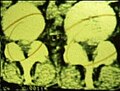 CT scan of disc herniation


See also[edit]

