Disruptive mood dysregulation disorder: Difference between revisions
CSV import |
CSV import |
||
| Line 1: | Line 1: | ||
{{SI}} | |||
{{Infobox medical condition | |||
| name = Disruptive mood dysregulation disorder | |||
| image = [[File:Angry_girl.jpg|alt=An angry girl]] | |||
| caption = An example of a child displaying symptoms of irritability | |||
| field = [[Psychiatry]] | |||
| symptoms = Severe temper outbursts, chronic irritability | |||
| onset = Before age 10 | |||
| duration = Persistent | |||
| causes = Unknown | |||
| risks = Family history of [[mood disorders]], [[anxiety disorders]] | |||
| diagnosis = Clinical evaluation | |||
| differential = [[Bipolar disorder]], [[Oppositional defiant disorder]], [[Attention deficit hyperactivity disorder]] | |||
| treatment = [[Psychotherapy]], [[medication]] | |||
| medication = [[Stimulants]], [[antidepressants]], [[antipsychotics]] | |||
| prognosis = Variable | |||
| frequency = Unknown | |||
}} | |||
'''Disruptive Mood Dysregulation Disorder''' ('''DMDD''') is a relatively new classification of mood disorder in the [[Diagnostic and Statistical Manual of Mental Disorders]] (DSM-5), introduced in 2013. It is characterized by severe and recurrent temper outbursts that are grossly out of proportion in intensity or duration to the situation. These outbursts can be verbal or behavioral, and they must occur consistently in at least two settings (e.g., at home and at school) for a diagnosis to be made. DMDD aims to address the need for a better classification of children who were previously diagnosed with pediatric [[bipolar disorder]], but whose symptoms did not fully align with that diagnosis. | '''Disruptive Mood Dysregulation Disorder''' ('''DMDD''') is a relatively new classification of mood disorder in the [[Diagnostic and Statistical Manual of Mental Disorders]] (DSM-5), introduced in 2013. It is characterized by severe and recurrent temper outbursts that are grossly out of proportion in intensity or duration to the situation. These outbursts can be verbal or behavioral, and they must occur consistently in at least two settings (e.g., at home and at school) for a diagnosis to be made. DMDD aims to address the need for a better classification of children who were previously diagnosed with pediatric [[bipolar disorder]], but whose symptoms did not fully align with that diagnosis. | ||
==Symptoms and Diagnosis== | ==Symptoms and Diagnosis== | ||
The core feature of DMDD is chronic, severe persistent irritability. This irritability is displayed through frequent temper outbursts that are disproportionate to the situation and inconsistent with the child's developmental level. Between these outbursts, the child's mood is persistently irritable or angry most of the day, nearly every day, and observable by others in the child's immediate social circle. | The core feature of DMDD is chronic, severe persistent irritability. This irritability is displayed through frequent temper outbursts that are disproportionate to the situation and inconsistent with the child's developmental level. Between these outbursts, the child's mood is persistently irritable or angry most of the day, nearly every day, and observable by others in the child's immediate social circle. | ||
To be diagnosed with DMDD, symptoms must be present for 12 or more months without a break of more than three months. The disorder should be diagnosed between the ages of 6 and 18 years, and the onset must be before the age of 10. It's important to differentiate DMDD from other mood disorders, such as [[major depressive disorder]] or [[bipolar disorder]], and behavioral disorders like [[oppositional defiant disorder]] (ODD) and [[attention deficit hyperactivity disorder]] (ADHD), which can have overlapping symptoms. | To be diagnosed with DMDD, symptoms must be present for 12 or more months without a break of more than three months. The disorder should be diagnosed between the ages of 6 and 18 years, and the onset must be before the age of 10. It's important to differentiate DMDD from other mood disorders, such as [[major depressive disorder]] or [[bipolar disorder]], and behavioral disorders like [[oppositional defiant disorder]] (ODD) and [[attention deficit hyperactivity disorder]] (ADHD), which can have overlapping symptoms. | ||
==Treatment== | ==Treatment== | ||
Treatment for DMDD is multifaceted and typically includes a combination of [[psychotherapy]], medication, and educational interventions. Cognitive-behavioral therapy (CBT) is often used to help the child develop coping mechanisms for anger and frustration. Family therapy may also be beneficial in teaching family members strategies to manage outbursts and reduce conflict. In some cases, medication may be prescribed to treat co-occurring conditions or to reduce the severity of the mood dysregulation, although there is no specific medication approved for DMDD. | Treatment for DMDD is multifaceted and typically includes a combination of [[psychotherapy]], medication, and educational interventions. Cognitive-behavioral therapy (CBT) is often used to help the child develop coping mechanisms for anger and frustration. Family therapy may also be beneficial in teaching family members strategies to manage outbursts and reduce conflict. In some cases, medication may be prescribed to treat co-occurring conditions or to reduce the severity of the mood dysregulation, although there is no specific medication approved for DMDD. | ||
==Epidemiology== | ==Epidemiology== | ||
The prevalence of DMDD is estimated to be between 2% and 5% among children and adolescents. It is more commonly diagnosed in males compared to females. The disorder can have a significant impact on the child's social, academic, and family life, often leading to school suspension or expulsion and strained family relationships. | The prevalence of DMDD is estimated to be between 2% and 5% among children and adolescents. It is more commonly diagnosed in males compared to females. The disorder can have a significant impact on the child's social, academic, and family life, often leading to school suspension or expulsion and strained family relationships. | ||
==Prognosis== | ==Prognosis== | ||
The long-term prognosis for children with DMDD is still being studied, as the diagnosis is relatively new. However, early intervention and treatment are believed to improve outcomes. Without treatment, children with DMDD may continue to experience significant impairments in their social and academic functioning. | The long-term prognosis for children with DMDD is still being studied, as the diagnosis is relatively new. However, early intervention and treatment are believed to improve outcomes. Without treatment, children with DMDD may continue to experience significant impairments in their social and academic functioning. | ||
==See Also== | ==See Also== | ||
* [[Mood disorder]] | * [[Mood disorder]] | ||
* [[Child psychiatry]] | * [[Child psychiatry]] | ||
* [[Bipolar disorder in children]] | * [[Bipolar disorder in children]] | ||
==References== | ==References== | ||
<references/> | <references/> | ||
[[Category:Mood Disorders]] | [[Category:Mood Disorders]] | ||
[[Category:Child Psychiatry]] | [[Category:Child Psychiatry]] | ||
[[Category:Psychiatric Diagnosis]] | [[Category:Psychiatric Diagnosis]] | ||
{{Medicine-stub}} | {{Medicine-stub}} | ||
<gallery> | <gallery> | ||
Latest revision as of 18:28, 5 April 2025

Editor-In-Chief: Prab R Tumpati, MD
Obesity, Sleep & Internal medicine
Founder, WikiMD Wellnesspedia &
W8MD medical weight loss NYC and sleep center NYC
| Disruptive mood dysregulation disorder | |
|---|---|

| |
| Synonyms | N/A |
| Pronounce | N/A |
| Specialty | N/A |
| Symptoms | Severe temper outbursts, chronic irritability |
| Complications | N/A |
| Onset | Before age 10 |
| Duration | Persistent |
| Types | N/A |
| Causes | Unknown |
| Risks | Family history of mood disorders, anxiety disorders |
| Diagnosis | Clinical evaluation |
| Differential diagnosis | Bipolar disorder, Oppositional defiant disorder, Attention deficit hyperactivity disorder |
| Prevention | N/A |
| Treatment | Psychotherapy, medication |
| Medication | Stimulants, antidepressants, antipsychotics |
| Prognosis | Variable |
| Frequency | Unknown |
| Deaths | N/A |
Disruptive Mood Dysregulation Disorder (DMDD) is a relatively new classification of mood disorder in the Diagnostic and Statistical Manual of Mental Disorders (DSM-5), introduced in 2013. It is characterized by severe and recurrent temper outbursts that are grossly out of proportion in intensity or duration to the situation. These outbursts can be verbal or behavioral, and they must occur consistently in at least two settings (e.g., at home and at school) for a diagnosis to be made. DMDD aims to address the need for a better classification of children who were previously diagnosed with pediatric bipolar disorder, but whose symptoms did not fully align with that diagnosis.
Symptoms and Diagnosis[edit]
The core feature of DMDD is chronic, severe persistent irritability. This irritability is displayed through frequent temper outbursts that are disproportionate to the situation and inconsistent with the child's developmental level. Between these outbursts, the child's mood is persistently irritable or angry most of the day, nearly every day, and observable by others in the child's immediate social circle. To be diagnosed with DMDD, symptoms must be present for 12 or more months without a break of more than three months. The disorder should be diagnosed between the ages of 6 and 18 years, and the onset must be before the age of 10. It's important to differentiate DMDD from other mood disorders, such as major depressive disorder or bipolar disorder, and behavioral disorders like oppositional defiant disorder (ODD) and attention deficit hyperactivity disorder (ADHD), which can have overlapping symptoms.
Treatment[edit]
Treatment for DMDD is multifaceted and typically includes a combination of psychotherapy, medication, and educational interventions. Cognitive-behavioral therapy (CBT) is often used to help the child develop coping mechanisms for anger and frustration. Family therapy may also be beneficial in teaching family members strategies to manage outbursts and reduce conflict. In some cases, medication may be prescribed to treat co-occurring conditions or to reduce the severity of the mood dysregulation, although there is no specific medication approved for DMDD.
Epidemiology[edit]
The prevalence of DMDD is estimated to be between 2% and 5% among children and adolescents. It is more commonly diagnosed in males compared to females. The disorder can have a significant impact on the child's social, academic, and family life, often leading to school suspension or expulsion and strained family relationships.
Prognosis[edit]
The long-term prognosis for children with DMDD is still being studied, as the diagnosis is relatively new. However, early intervention and treatment are believed to improve outcomes. Without treatment, children with DMDD may continue to experience significant impairments in their social and academic functioning.
See Also[edit]
References[edit]
<references/>

-
 An angry girl expressing frustration
 -
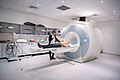 Functional magnetic resonance imaging at the Imperial Centre for Psychedelic Research
 -
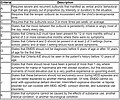 DSM V Criteria for Disruptive Mood Dysregulation Disorder


