Apium graveolens: Difference between revisions
CSV import |
CSV import Tags: mobile edit mobile web edit |
||
| Line 5: | Line 5: | ||
File:Céleri_à_couper0405.jpg|Cutting Celery | File:Céleri_à_couper0405.jpg|Cutting Celery | ||
</gallery> | </gallery> | ||
==Apium graveolens== | |||
'''Apium graveolens''' is a species in the family [[Apiaceae]], commonly known as celery. It is a biennial plant that is cultivated for its stalks, leaves, and seeds. The plant is native to the Mediterranean region and has been used in culinary and medicinal applications for centuries. | |||
==Description== | |||
Apium graveolens is a herbaceous plant that can grow up to 1 meter in height. It has a fibrous stalk that is typically pale green in color, although some varieties may have a more intense green hue. The leaves are pinnate with rhombic leaflets, and the plant produces small white flowers arranged in umbels. | |||
The seeds of Apium graveolens are small and brown, and they are often used as a spice known as [[celery seed]]. The plant has a distinctive aroma and flavor, which is due to the presence of volatile oils such as limonene and selinene. | |||
==Cultivation== | |||
Celery is grown in temperate climates and requires a long growing season. It prefers rich, well-drained soil and a consistent supply of moisture. The plant is sensitive to temperature fluctuations and can bolt if exposed to cold weather. | |||
There are several varieties of Apium graveolens, including: | |||
* '''Apium graveolens var. dulce''' - Commonly known as stalk celery, this variety is grown for its crisp, edible stalks. | |||
* '''Apium graveolens var. rapaceum''' - Known as celeriac or celery root, this variety is cultivated for its large, bulbous root. | |||
* '''Apium graveolens var. secalinum''' - Also known as leaf celery or Chinese celery, this variety is grown for its flavorful leaves. | |||
==Uses== | |||
===Culinary=== | |||
Celery is a versatile vegetable used in a variety of dishes. The stalks are often eaten raw as a snack or used as a base for soups, stews, and salads. Celery leaves can be used as an herb to add flavor to dishes, while celery seeds are used as a spice in pickling and seasoning blends. | |||
===Medicinal=== | |||
In traditional medicine, celery has been used for its purported diuretic and anti-inflammatory properties. It is believed to aid in digestion and may help lower blood pressure. However, scientific evidence supporting these claims is limited. | |||
==Related pages== | |||
* [[Apiaceae]] | |||
* [[Celeriac]] | |||
* [[Celery seed]] | |||
* [[Herb]] | |||
* [[Vegetable]] | |||
{{Apiaceae}} | |||
[[Category:Apiaceae]] | |||
[[Category:Edible plants]] | |||
[[Category:Medicinal plants]] | |||
Latest revision as of 00:41, 19 February 2025
-
 Wild Celery in Elswick, Northumberland
 -
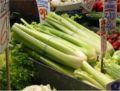 Green Celery (Apium graveolens var. dulce)
 -
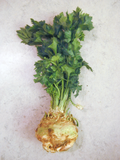 Apium graveolens
 -
 Cutting Celery
,_Elswick,_Northumberland_4.jpg)
.jpg)


Apium graveolens[edit]
Apium graveolens is a species in the family Apiaceae, commonly known as celery. It is a biennial plant that is cultivated for its stalks, leaves, and seeds. The plant is native to the Mediterranean region and has been used in culinary and medicinal applications for centuries.
Description[edit]
Apium graveolens is a herbaceous plant that can grow up to 1 meter in height. It has a fibrous stalk that is typically pale green in color, although some varieties may have a more intense green hue. The leaves are pinnate with rhombic leaflets, and the plant produces small white flowers arranged in umbels.
The seeds of Apium graveolens are small and brown, and they are often used as a spice known as celery seed. The plant has a distinctive aroma and flavor, which is due to the presence of volatile oils such as limonene and selinene.
Cultivation[edit]
Celery is grown in temperate climates and requires a long growing season. It prefers rich, well-drained soil and a consistent supply of moisture. The plant is sensitive to temperature fluctuations and can bolt if exposed to cold weather.
There are several varieties of Apium graveolens, including:
- Apium graveolens var. dulce - Commonly known as stalk celery, this variety is grown for its crisp, edible stalks.
- Apium graveolens var. rapaceum - Known as celeriac or celery root, this variety is cultivated for its large, bulbous root.
- Apium graveolens var. secalinum - Also known as leaf celery or Chinese celery, this variety is grown for its flavorful leaves.
Uses[edit]
Culinary[edit]
Celery is a versatile vegetable used in a variety of dishes. The stalks are often eaten raw as a snack or used as a base for soups, stews, and salads. Celery leaves can be used as an herb to add flavor to dishes, while celery seeds are used as a spice in pickling and seasoning blends.
Medicinal[edit]
In traditional medicine, celery has been used for its purported diuretic and anti-inflammatory properties. It is believed to aid in digestion and may help lower blood pressure. However, scientific evidence supporting these claims is limited.
