Epidemic dropsy: Difference between revisions
CSV import |
CSV import |
||
| Line 1: | Line 1: | ||
{{SI}} | |||
{{Infobox medical condition | |||
| name = Epidemic dropsy | |||
| image = [[File:1-s2.0-S0304416504003162-gr1.jpg]] | |||
| caption = Clinical presentation of epidemic dropsy | |||
| field = [[Toxicology]] | |||
| symptoms = [[Edema]], [[dyspnea]], [[gastrointestinal disturbances]], [[glaucoma]], [[cardiac failure]] | |||
| complications = [[Heart failure]], [[respiratory distress]] | |||
| onset = Acute | |||
| duration = Variable | |||
| causes = Consumption of [[adulterated mustard oil]] | |||
| risks = Contaminated food supply | |||
| diagnosis = Clinical evaluation, history of exposure | |||
| differential = [[Beriberi]], [[nephrotic syndrome]], [[congestive heart failure]] | |||
| prevention = Avoidance of contaminated oil | |||
| treatment = Supportive care, [[diuretics]], [[antihistamines]], [[steroids]] | |||
| prognosis = Variable, can be severe | |||
| frequency = Rare, associated with outbreaks | |||
}} | |||
'''Epidemic dropsy''' is a clinical syndrome that occurs after the consumption of adulterated mustard oil contaminated with Argemone mexicana seeds. The disease is characterized by bilateral pitting edema, ascites, breathlessness, and cardiac failure. | '''Epidemic dropsy''' is a clinical syndrome that occurs after the consumption of adulterated mustard oil contaminated with Argemone mexicana seeds. The disease is characterized by bilateral pitting edema, ascites, breathlessness, and cardiac failure. | ||
==Etiology== | ==Etiology== | ||
The disease is caused by the consumption of mustard oil adulterated with seeds of [[Argemone mexicana]]. The toxic principle is sanguinarine and dihydrosanguinarine, which are benzophenanthridine alkaloids present in the seeds and plant of Argemone mexicana. | The disease is caused by the consumption of mustard oil adulterated with seeds of [[Argemone mexicana]]. The toxic principle is sanguinarine and dihydrosanguinarine, which are benzophenanthridine alkaloids present in the seeds and plant of Argemone mexicana. | ||
==Clinical Features== | ==Clinical Features== | ||
The clinical features of epidemic dropsy include bilateral pitting [[edema]], [[ascites]], breathlessness, and cardiac failure. Other symptoms may include diarrhea, vomiting, abdominal pain, and fever. | The clinical features of epidemic dropsy include bilateral pitting [[edema]], [[ascites]], breathlessness, and cardiac failure. Other symptoms may include diarrhea, vomiting, abdominal pain, and fever. | ||
==Diagnosis== | ==Diagnosis== | ||
The diagnosis of epidemic dropsy is based on the clinical features and history of consumption of adulterated mustard oil. Laboratory investigations may show anemia, leukocytosis, and increased serum creatinine and urea levels. | The diagnosis of epidemic dropsy is based on the clinical features and history of consumption of adulterated mustard oil. Laboratory investigations may show anemia, leukocytosis, and increased serum creatinine and urea levels. | ||
==Treatment== | ==Treatment== | ||
The treatment of epidemic dropsy is mainly supportive and symptomatic. Diuretics are used to reduce edema and ascites. Cardiac failure is managed with digitalis and other cardiac drugs. Antibiotics are given for secondary infections. | The treatment of epidemic dropsy is mainly supportive and symptomatic. Diuretics are used to reduce edema and ascites. Cardiac failure is managed with digitalis and other cardiac drugs. Antibiotics are given for secondary infections. | ||
==Prevention== | ==Prevention== | ||
Prevention of epidemic dropsy involves the regulation of the sale of mustard oil and the detection and removal of Argemone mexicana seeds from mustard seeds. | Prevention of epidemic dropsy involves the regulation of the sale of mustard oil and the detection and removal of Argemone mexicana seeds from mustard seeds. | ||
==Images== | |||
<gallery> | |||
File:Argemone_mexicana_flower_2.jpg|Argemone mexicana flower | |||
File:Brassica_juncea_-_Köhler–s_Medizinal-Pflanzen-168.jpg|Brassica juncea | |||
</gallery> | |||
[[Category:Medical conditions]] | [[Category:Medical conditions]] | ||
[[Category:Toxicology]] | [[Category:Toxicology]] | ||
[[Category:Cardiology]] | [[Category:Cardiology]] | ||
{{stub}} | {{stub}} | ||
Latest revision as of 14:35, 6 April 2025

Editor-In-Chief: Prab R Tumpati, MD
Obesity, Sleep & Internal medicine
Founder, WikiMD Wellnesspedia &
W8MD's medical weight loss NYC, sleep center NYC
Philadelphia medical weight loss and Philadelphia sleep clinics
| Epidemic dropsy | |
|---|---|

| |
| Synonyms | N/A |
| Pronounce | N/A |
| Specialty | N/A |
| Symptoms | Edema, dyspnea, gastrointestinal disturbances, glaucoma, cardiac failure |
| Complications | Heart failure, respiratory distress |
| Onset | Acute |
| Duration | Variable |
| Types | N/A |
| Causes | Consumption of adulterated mustard oil |
| Risks | Contaminated food supply |
| Diagnosis | Clinical evaluation, history of exposure |
| Differential diagnosis | Beriberi, nephrotic syndrome, congestive heart failure |
| Prevention | Avoidance of contaminated oil |
| Treatment | Supportive care, diuretics, antihistamines, steroids |
| Medication | N/A |
| Prognosis | Variable, can be severe |
| Frequency | Rare, associated with outbreaks |
| Deaths | N/A |
Epidemic dropsy is a clinical syndrome that occurs after the consumption of adulterated mustard oil contaminated with Argemone mexicana seeds. The disease is characterized by bilateral pitting edema, ascites, breathlessness, and cardiac failure.
Etiology[edit]
The disease is caused by the consumption of mustard oil adulterated with seeds of Argemone mexicana. The toxic principle is sanguinarine and dihydrosanguinarine, which are benzophenanthridine alkaloids present in the seeds and plant of Argemone mexicana.
Clinical Features[edit]
The clinical features of epidemic dropsy include bilateral pitting edema, ascites, breathlessness, and cardiac failure. Other symptoms may include diarrhea, vomiting, abdominal pain, and fever.
Diagnosis[edit]
The diagnosis of epidemic dropsy is based on the clinical features and history of consumption of adulterated mustard oil. Laboratory investigations may show anemia, leukocytosis, and increased serum creatinine and urea levels.
Treatment[edit]
The treatment of epidemic dropsy is mainly supportive and symptomatic. Diuretics are used to reduce edema and ascites. Cardiac failure is managed with digitalis and other cardiac drugs. Antibiotics are given for secondary infections.
Prevention[edit]
Prevention of epidemic dropsy involves the regulation of the sale of mustard oil and the detection and removal of Argemone mexicana seeds from mustard seeds.
Images[edit]
-
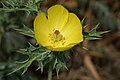 Argemone mexicana flower
 -
 Brassica juncea


