Alcohol flush reaction: Difference between revisions
CSV import |
CSV import |
||
| Line 1: | Line 1: | ||
== Alcohol Flush Reaction == | |||
{{Infobox medical condition | |||
| name = Alcohol flush reaction | |||
| image =[[File:The_Alcohol_Flushing_Response.png|250px]] | |||
| caption = A person experiencing alcohol flush reaction | |||
| synonyms = Asian flush syndrome, Asian glow | |||
| field = [[Toxicology]], [[Gastroenterology]] | |||
| symptoms = [[Facial flushing]], [[nausea]], [[headache]], [[tachycardia]], [[hypotension]] | |||
| onset = Within minutes of alcohol consumption | |||
| duration = Variable, typically resolves within hours | |||
| causes = [[Acetaldehyde dehydrogenase]] deficiency | |||
| risks = Increased risk of [[esophageal cancer]] | |||
| diagnosis = Clinical evaluation, [[genetic testing]] | |||
| differential = [[Rosacea]], [[carcinoid syndrome]], [[mastocytosis]] | |||
| prevention = Avoidance of alcohol | |||
| treatment = Symptomatic treatment, [[antihistamines]] | |||
| frequency = Common in East Asian populations | |||
}} | |||
== Alcohol Flush Reaction == | |||
[[File:The_Alcohol_Flushing_Response.png|thumb|right|Illustration of the alcohol flushing response]] | [[File:The_Alcohol_Flushing_Response.png|thumb|right|Illustration of the alcohol flushing response]] | ||
Revision as of 02:41, 4 April 2025
| Alcohol flush reaction | |
|---|---|

| |
| Synonyms | Asian flush syndrome, Asian glow |
| Pronounce | N/A |
| Specialty | N/A |
| Symptoms | Facial flushing, nausea, headache, tachycardia, hypotension |
| Complications | N/A |
| Onset | Within minutes of alcohol consumption |
| Duration | Variable, typically resolves within hours |
| Types | N/A |
| Causes | Acetaldehyde dehydrogenase deficiency |
| Risks | Increased risk of esophageal cancer |
| Diagnosis | Clinical evaluation, genetic testing |
| Differential diagnosis | Rosacea, carcinoid syndrome, mastocytosis |
| Prevention | Avoidance of alcohol |
| Treatment | Symptomatic treatment, antihistamines |
| Medication | N/A |
| Prognosis | N/A |
| Frequency | Common in East Asian populations |
| Deaths | N/A |
== Alcohol Flush Reaction ==
The alcohol flush reaction is a condition in which the face and sometimes other parts of the body experience flushing or redness after the consumption of alcohol. This reaction is primarily due to an accumulation of acetaldehyde, a metabolic byproduct of alcohol, in the body.
Causes
The alcohol flush reaction is caused by a deficiency in the enzyme aldehyde dehydrogenase 2 (ALDH2), which is responsible for breaking down acetaldehyde into acetic acid. Individuals with an inactive form of the ALDH2 enzyme cannot efficiently metabolize acetaldehyde, leading to its accumulation and the subsequent flushing response.
Genetic Basis

The genetic basis of the alcohol flush reaction is linked to a single nucleotide polymorphism (SNP) in the ALDH2 gene, known as rs671. This SNP results in the substitution of glutamic acid with lysine at position 487 of the enzyme, rendering it inactive. The inactive form of ALDH2 is prevalent among East Asian populations, which explains the higher incidence of alcohol flush reaction in these groups.
Symptoms
The primary symptom of the alcohol flush reaction is facial flushing, but it can also include:
- Increased heart rate
- Nausea
- Headache
- Dizziness
- General discomfort
Health Implications
Individuals with the alcohol flush reaction may have an increased risk of developing esophageal cancer due to the carcinogenic effects of acetaldehyde. The accumulation of acetaldehyde can also lead to other health issues, such as hypertension and alcohol intolerance.
Management
There is no cure for the alcohol flush reaction, but it can be managed by avoiding alcohol consumption or using medications that inhibit alcohol metabolism. Some individuals may choose to use cosmetic products to mask the redness associated with flushing.
Related Pages
Gallery
-
 Example of facial flushing in an individual with alcohol flush reaction

-
 The Alcohol Flushing Response
 -
Asian Flush Back
-
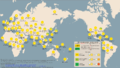 ALDH2 rs671 genotype frequency
