Accessible tourism: Difference between revisions
CSV import |
CSV import |
||
| Line 62: | Line 62: | ||
[[Category:Accessibility]] | [[Category:Accessibility]] | ||
[[Category:Disability]] | [[Category:Disability]] | ||
<gallery> | |||
File:Nehantic_Trail_-_Rhododentron_Sanctuary_Trail_entrance_sign.jpg|Accessible tourism | |||
File:Disabled_beach_access_on_Syros_-_a_way_for_wheelchair_users_to_enter_and_exit_the_water.jpg|Disabled beach access on Syros | |||
File:Extended_picnic_table_campground.jpg|Extended picnic table campground | |||
File:Brookings_Oregon_accessible_coast_ramp_boardwalk.jpg|Brookings Oregon accessible coast ramp boardwalk | |||
File:Accessible_beach_ramp_NZ.jpg|Accessible beach ramp NZ | |||
File:Pinery_Prov_Park_accessible_yurt.jpg|Pinery Provincial Park accessible yurt | |||
File:Accessible_shower_stall.jpg|Accessible shower stall | |||
File:Morgans_Wonderland_Texas_ultra_accessible.jpg|Morgan's Wonderland Texas ultra accessible | |||
File:Snow_wheelchair.jpg|Snow wheelchair | |||
</gallery> | |||
Latest revision as of 12:17, 18 February 2025
Accessible Tourism[edit]

Accessible tourism is a form of tourism that involves travel to destinations that are accessible to all people, regardless of their physical limitations, disabilities, or age. This concept ensures that tourist destinations, products, and services are designed to be inclusive and accessible to everyone.
Overview[edit]
Accessible tourism aims to provide equal opportunities for people with disabilities to enjoy tourism experiences. This includes ensuring that facilities, services, and information are accessible to all. The goal is to create an inclusive environment that accommodates the needs of all travelers, including those with mobility, vision, hearing, and cognitive impairments.
Key Components[edit]
Physical Accessibility[edit]
Physical accessibility involves the design and adaptation of the built environment to ensure that it is usable by people with disabilities. This includes:
- Ramps and elevators for wheelchair users.
- Accessible restrooms and shower facilities.

Beach access for wheelchair users. - Accessible parking spaces.
- Accessible picnic areas and campsites.

Information Accessibility[edit]
Information accessibility ensures that all travelers can access information about tourism services and destinations. This includes:
- Websites that are compatible with screen readers.
- Information available in braille and large print.
- Audio guides and sign language interpreters.
Service Accessibility[edit]
Service accessibility involves training staff to assist travelers with disabilities and ensuring that services are inclusive. This includes:
- Staff training in disability awareness and assistance.
- Availability of assistive technology and devices.
- Policies that accommodate service animals.
Benefits of Accessible Tourism[edit]
Accessible tourism benefits not only individuals with disabilities but also the tourism industry and society as a whole. It:
- Increases the potential customer base for tourism businesses.
- Enhances the quality of life for people with disabilities.
- Promotes social inclusion and diversity.
Challenges[edit]
Despite the benefits, there are challenges in implementing accessible tourism, such as:
- High costs of modifying existing infrastructure.
- Lack of awareness and training among tourism providers.
- Inconsistent accessibility standards across regions.
Related Pages[edit]
Gallery[edit]
-
 Extended picnic table at a campground.
 -
 Accessible coast ramp and boardwalk.
 -
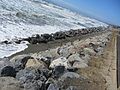 Accessible beach ramp in New Zealand.
 -
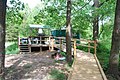 Accessible yurt in Pinery Provincial Park.
 -
 Accessible shower stall.
 -
 Morgan's Wonderland, an ultra-accessible theme park.
 -
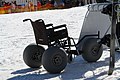 Wheelchair designed for snow.


-
 Accessible tourism
 -
 Disabled beach access on Syros
 -
Extended picnic table campground
-
Brookings Oregon accessible coast ramp boardwalk
-
Accessible beach ramp NZ
-
Pinery Provincial Park accessible yurt
-
Accessible shower stall
-
Morgan's Wonderland Texas ultra accessible
-
Snow wheelchair
