Abraham Colles: Difference between revisions
CSV import |
CSV import |
||
| Line 36: | Line 36: | ||
[[Category:People from Kilkenny]] | [[Category:People from Kilkenny]] | ||
[[Category:Alumni of the Royal College of Surgeons in Ireland]] | [[Category:Alumni of the Royal College of Surgeons in Ireland]] | ||
<gallery> | |||
File:Abraham_Colles.jpg|Portrait of Abraham Colles | |||
File:Abraham_Colles_indenture_1790_to_Phillip_Woodroffe.jpg|Abraham Colles indenture 1790 to Phillip Woodroffe | |||
</gallery> | |||
Latest revision as of 01:20, 18 February 2025
Irish surgeon known for Colles' fracture
Abraham Colles (23 July 1773 – 16 November 1843) was a prominent Irish surgeon and anatomist, best known for his description of the Colles' fracture. He was a significant figure in the field of surgery during the early 19th century.
Early life and education[edit]
Abraham Colles was born in Kilkenny, Ireland, in 1773. He was the son of William Colles, a successful merchant. Colles attended the Royal College of Surgeons in Ireland (RCSI), where he excelled in his studies. In 1790, he was indentured to Phillip Woodroffe, a prominent surgeon in Dublin, as evidenced by the surviving indenture document.
Career[edit]
Colles began his medical career at the Meath Hospital in Dublin, where he quickly gained a reputation for his surgical skills. In 1804, he was appointed Professor of Anatomy, Surgery, and Physiology at the RCSI, a position he held for over 30 years. During his tenure, Colles made significant contributions to the field of surgery and medical education.
Contributions to medicine[edit]
Colles is best known for his description of the Colles' fracture, a common fracture of the distal radius in the forearm. This fracture is often caused by a fall on an outstretched hand and is characterized by a distinctive "dinner fork" deformity. Colles' work on this fracture was published in 1814 and remains a cornerstone of orthopedic knowledge.
In addition to his work on fractures, Colles made important contributions to the understanding of syphilis. He described what is now known as Colles' law, which states that a mother who has given birth to a child with congenital syphilis is immune to the disease, even if she shows no symptoms.
Legacy[edit]
Abraham Colles' work had a lasting impact on the field of surgery. His teachings and publications influenced generations of surgeons and medical students. The Colles' fascia, a layer of connective tissue in the perineum, is also named after him.
Colles passed away in 1843, but his legacy continues to be felt in the medical community. His contributions to the understanding of fractures and syphilis remain relevant to this day.
Related pages[edit]
Gallery[edit]
-
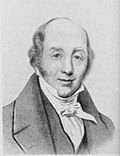 Portrait of Abraham Colles
 -
 Indenture document of Abraham Colles to Phillip Woodroffe, 1790


-
Portrait of Abraham Colles
-
Abraham Colles indenture 1790 to Phillip Woodroffe
