Artificial ligament: Difference between revisions
CSV import |
CSV import |
||
| Line 49: | Line 49: | ||
[[Category:Middle Eastern cuisine]] | [[Category:Middle Eastern cuisine]] | ||
[[Category:Salads]] | [[Category:Salads]] | ||
== Artificial_ligament == | |||
<gallery> | |||
File:LARS_artificial_ligament.png|LARS artificial ligament | |||
File:PET_Hyaluronic_Acid_Tissue.png|PET Hyaluronic Acid Tissue | |||
File:Rate_of_knee_injury_among_patients_with_failed_ligament_augmentation_and_reconstruction_system.png|Rate of knee injury among patients with failed ligament augmentation and reconstruction system | |||
</gallery> | |||
Latest revision as of 04:17, 18 February 2025
Arab Salad[edit]

Arab salad is a traditional dish commonly found in the Middle East and North Africa. It is a fresh, vibrant salad that typically includes a variety of vegetables and herbs, often dressed with olive oil and lemon juice. This salad is a staple in many Arab households and is known for its refreshing taste and nutritional benefits.
Ingredients[edit]
The ingredients of an Arab salad can vary depending on the region and personal preferences, but it generally includes:
Some variations may also include ingredients such as bell peppers, radishes, or lettuce.
Preparation[edit]
The preparation of Arab salad is straightforward and involves chopping the vegetables into small, uniform pieces. The herbs are finely chopped and mixed with the vegetables. The salad is then dressed with a mixture of olive oil, lemon juice, salt, and pepper. It is important to mix the salad just before serving to ensure the vegetables remain crisp and fresh.
Variations[edit]
Arab salad has many regional variations, reflecting the diverse culinary traditions of the Arab world. Some popular variations include:
- Tabbouleh: A salad primarily made of parsley, with tomatoes, mint, onion, and soaked bulgur, dressed with olive oil and lemon juice.
- Fattoush: A salad that includes pieces of fried or toasted pita bread, along with mixed greens and vegetables.
- Salata Baladi: An Egyptian version that often includes green peppers and sometimes feta cheese.
Nutritional Benefits[edit]
Arab salad is rich in vitamins and minerals due to its high content of fresh vegetables and herbs. It is a good source of vitamin C, vitamin A, and fiber. The use of olive oil provides healthy monounsaturated fats, which are beneficial for heart health.
Cultural Significance[edit]
In Arab culture, salads are often served as part of a mezze, a selection of small dishes served as appetizers. Arab salad is a common accompaniment to main dishes and is valued for its ability to balance richer, heavier foods with its light and refreshing qualities.
Related Pages[edit]
Artificial_ligament[edit]
-
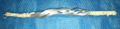 LARS artificial ligament
 -
 PET Hyaluronic Acid Tissue
 -
 Rate of knee injury among patients with failed ligament augmentation and reconstruction system


