Leucoanthocyanidin: Difference between revisions
CSV import |
CSV import |
||
| Line 24: | Line 24: | ||
{{flavonoid-stub}} | {{flavonoid-stub}} | ||
{{No image}} | {{No image}} | ||
<gallery> | |||
File:Flavan-3,4-diol.svg|Flavan-3,4-diol | |||
File:Leucoanthocyanidin 3D BS.png|Leucoanthocyanidin 3D BS | |||
</gallery> | |||
Revision as of 06:09, 3 March 2025
Leucoanthocyanidin is a type of flavonoid, a class of phytochemicals known for their potential health benefits. They are found in a variety of plants, including fruits, vegetables, and certain types of grains. Leucoanthocyanidins are colorless compounds that contribute to the formation of other flavonoids, such as anthocyanidins, which are responsible for the vibrant colors seen in many fruits and flowers.
Chemical Structure
Leucoanthocyanidins are composed of two phenyl groups and a heterocyclic ring. This structure is similar to that of other flavonoids, but leucoanthocyanidins are distinguished by the absence of a double bond in the heterocyclic ring and the lack of an oxygen atom at the 4 position.
Biosynthesis
The biosynthesis of leucoanthocyanidins occurs through the phenylpropanoid pathway, a metabolic pathway that produces a wide range of secondary metabolites in plants. The key enzyme in this process is leucoanthocyanidin reductase (LAR), which catalyzes the reduction of leucoanthocyanidins to catechins, another type of flavonoid.
Health Benefits
While research is still ongoing, some studies suggest that leucoanthocyanidins may have various health benefits. These include antioxidant, anti-inflammatory, and anti-cancer properties. They may also play a role in the prevention of cardiovascular diseases.
Food Sources
Leucoanthocyanidins are found in a variety of foods, including certain fruits like apples and grapes, vegetables such as kale and spinach, and grains like sorghum and barley. They are also present in beverages like tea and wine.
See Also
This flavonoid-related article is a stub. You can help WikiMD by expanding it.
-
 Flavan-3,4-diol
 -
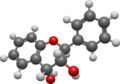 Leucoanthocyanidin 3D BS


