Farl: Difference between revisions
CSV import |
CSV import |
||
| Line 31: | Line 31: | ||
{{food-stub}} | {{food-stub}} | ||
{{No image}} | {{No image}} | ||
<gallery> | |||
File:Ben_W_Bell_Soda_Bread_Farl_05_June_2007.jpg|Soda Bread Farl | |||
</gallery> | |||
Revision as of 21:37, 20 February 2025
Farl is a type of bread or cake, traditionally made in Ireland and Scotland. The term is derived from the Gaelic word fardel, which means "four parts". Farls are typically made from either potato or soda bread dough, and are cut into four pieces before being baked or fried.
History
The history of the farl dates back to the early 19th century, when it was a staple food in the diets of the Irish and Scottish working classes. The simplicity of its ingredients and the ease of its preparation made it a popular choice for families living in rural areas.
Preparation
To prepare a farl, the dough is first rolled out into a round shape. It is then cut into four equal parts, or "farls". The farls are then either baked in the oven or fried on a griddle. The result is a dense, hearty bread that can be served with a variety of dishes.
Varieties
There are several varieties of farl, including potato farl and soda farl. Potato farl, also known as tattie scone in Scotland, is made from a mixture of mashed potatoes, flour, and butter. Soda farl, on the other hand, is made from a dough of flour, buttermilk, and baking soda.
In Popular Culture
Farls have a significant place in Irish and Scottish culture. They are often served as part of a traditional Ulster fry or full breakfast, and are a common feature in celebrations of Saint Patrick's Day and Burns Night.
See Also
References
<references />

-
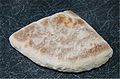 Soda Bread Farl

