Ventral tegmental area: Difference between revisions
CSV import |
CSV import |
||
| Line 32: | Line 32: | ||
[[Category:Midbrain]] | [[Category:Midbrain]] | ||
[[Category:Neuroanatomy]] | [[Category:Neuroanatomy]] | ||
<gallery> | |||
File:3D_Medical_Animation_Mid-Brain_Different_Parts.jpg|3D Medical Animation of Mid-Brain Different Parts | |||
File:Gray712.png|Gray's Anatomy Illustration of the Midbrain | |||
File:Clinical.jpg|Ventral tegmental area | |||
</gallery> | |||
Revision as of 02:12, 18 February 2025
Part of the midbrain involved in reward and motivation
The ventral tegmental area (VTA) is a group of neurons located close to the midline on the floor of the midbrain. The VTA is an important part of the brain's reward system and is involved in the release of the neurotransmitter dopamine.
Anatomy
The VTA is situated in the midbrain, adjacent to the substantia nigra and the red nucleus. It is composed of several types of neurons, including dopaminergic, GABAergic, and glutamatergic neurons. The VTA projects to various parts of the brain, including the nucleus accumbens, prefrontal cortex, and amygdala.

Function
The VTA plays a crucial role in the brain's reward circuitry. It is involved in the release of dopamine, a neurotransmitter associated with pleasure and reward. The VTA is activated by rewarding stimuli, such as food, sex, and drugs, and is thought to be involved in the reinforcement of behaviors.
Clinical significance
Dysfunction of the VTA has been implicated in various neuropsychiatric disorders, including addiction, schizophrenia, and depression. The VTA's role in addiction is particularly well-studied, as many addictive substances increase dopamine release in the VTA, leading to reinforcement of drug-taking behavior.
Research
Research on the VTA has focused on its role in reward processing and its involvement in psychiatric disorders. Studies have used techniques such as optogenetics and functional MRI to investigate the VTA's function and connectivity.
Related pages
References
- Schultz, W. (1998). Predictive reward signal of dopamine neurons. Journal of Neurophysiology, 80(1), 1-27.
- Wise, R. A. (2004). Dopamine, learning and motivation. Nature Reviews Neuroscience, 5(6), 483-494.
-
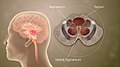 3D Medical Animation of Mid-Brain Different Parts
 -
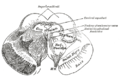 Gray's Anatomy Illustration of the Midbrain
 -
Ventral tegmental area


