Starka: Difference between revisions
CSV import |
CSV import |
||
| Line 43: | Line 43: | ||
[[Category:Alcoholic drinks]] | [[Category:Alcoholic drinks]] | ||
[[Category:Distilled drinks]] | [[Category:Distilled drinks]] | ||
<gallery> | |||
File:STARKA_35.png|STARKA 35 | |||
File:Starka_boxopen_640.jpg|Starka box open | |||
</gallery> | |||
Revision as of 00:29, 27 February 2025
Template:Infobox Alcoholic beverage
Starka is a traditional vodka distilled from rye grain, which is primarily produced in Poland and Lithuania. The name "Starka" is derived from the Slavic word "stary," meaning "old," reflecting the aging process that is a key characteristic of this spirit.
History
Starka has a long history dating back to the 15th century. It was originally produced by Polish and Lithuanian nobility and was often used to celebrate the birth of a child. The tradition involved burying a barrel of Starka upon the birth of a child and unearthing it when the child reached adulthood, typically at their wedding.
Production
The production of Starka involves the fermentation of rye mash, followed by distillation. The distilled spirit is then aged in oak barrels, which imparts its distinctive amber color and complex flavor profile. The aging process can last anywhere from a few years to several decades, with longer aging periods resulting in a smoother and more refined spirit.
Flavor Profile
Starka is known for its rich and complex flavor, which includes notes of vanilla, dried fruit, and spices. The aging process in oak barrels contributes to its smoothness and depth, making it a unique and sought-after spirit among connoisseurs.
Cultural Significance
In both Poland and Lithuania, Starka holds cultural significance and is often associated with traditional celebrations and rituals. It is considered a symbol of heritage and is often enjoyed during special occasions.
See Also
References
External Links
-
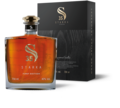 STARKA 35
 -
Starka box open


