Nyamiviridae: Difference between revisions
CSV import |
CSV import |
||
| Line 41: | Line 41: | ||
[[Category:Virus families]] | [[Category:Virus families]] | ||
[[Category:Negative-sense single-stranded RNA viruses]] | [[Category:Negative-sense single-stranded RNA viruses]] | ||
<gallery> | |||
File:Viruses-11-00927-g001.E.png|Nyamiviridae | |||
File:Viruses-11-00927-g002.A.png|Nyamiviridae | |||
File:ONSR.Nyami.Fig2.v8.png|Nyamiviridae | |||
File:ONSR.Nyami.Fig3.v4.png|Nyamiviridae | |||
</gallery> | |||
Revision as of 04:48, 18 February 2025
Nyamiviridae is a family of negative-sense single-stranded RNA viruses within the order Mononegavirales. This family includes viruses that primarily infect arthropods and vertebrates, including humans. The family name is derived from the Nyando River in Kenya, where the first virus of this family was isolated.
Taxonomy
The family Nyamiviridae is classified under the order Mononegavirales, which is characterized by viruses with a non-segmented, negative-sense RNA genome. The family currently includes the following genera:
Genome and Structure
Nyamiviridae viruses possess a single-stranded, negative-sense RNA genome. The genome is typically linear and non-segmented, ranging from 10 to 15 kilobases in length. The virions are enveloped, with a helical nucleocapsid structure. The envelope is derived from the host cell membrane and contains viral glycoproteins that are essential for host cell entry.
Replication Cycle
The replication cycle of Nyamiviridae viruses follows the general pattern of the Mononegavirales order. The virus enters the host cell through receptor-mediated endocytosis. Once inside, the viral RNA-dependent RNA polymerase transcribes the negative-sense RNA genome into positive-sense mRNA, which is then translated into viral proteins. The viral genome is replicated in the cytoplasm, and new virions are assembled and bud from the host cell, acquiring their envelope in the process.
Pathogenesis and Clinical Significance
Nyamiviridae viruses are known to infect a variety of hosts, including insects and vertebrates. Some members of this family have been associated with human disease, although they are not as well-studied as other viral families. The clinical manifestations can vary depending on the specific virus and host species involved.
Epidemiology
The distribution of Nyamiviridae viruses is not fully understood, but they have been isolated from various regions around the world. The primary mode of transmission is believed to be through arthropod vectors, such as mosquitoes and ticks, which can transmit the virus to vertebrate hosts.
Research and Future Directions
Research on Nyamiviridae is ongoing, with efforts focused on understanding the molecular biology, pathogenesis, and epidemiology of these viruses. Advances in sequencing technology and bioinformatics are aiding in the discovery of new viruses within this family and providing insights into their evolutionary relationships.
Also see

-
 Nyamiviridae
 -
 Nyamiviridae
 -
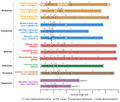 Nyamiviridae
 -
 Nyamiviridae


