Pyropia: Difference between revisions
CSV import |
CSV import |
||
| Line 20: | Line 20: | ||
[[Category:Aquaculture]] | [[Category:Aquaculture]] | ||
{{biology-stub}} | {{biology-stub}} | ||
<gallery> | |||
File:Pyropia nereocystis 167506363.jpg|Pyropia | |||
File:Seaweed (mild and dried).jpg|Pyropia | |||
File:Naturalis Biodiversity Center - L.4084188 - Porphyra thuretii Setch. and E.Y.Dawson - Algae - Plant type specimen.jpeg|Pyropia | |||
File:Porphyra haitanensis life cycle.JPG|Pyropia | |||
File:Naturalis Biodiversity Center - L.4084451 - Porphyra columbina Mont. - Algae - Plant type specimen.jpeg|Pyropia | |||
</gallery> | |||
Latest revision as of 01:11, 20 February 2025

.jpg)


Pyropia is a genus of red algae in the family Bangiaceae. It is a significant group of algae due to its economic importance, particularly in East Asian cuisines where it is used to produce nori, a dried seaweed product widely used in Japanese, Korean, and Chinese food. Pyropia species are also of interest in the field of marine biology and aquaculture due to their unique physiological and ecological characteristics.
Description[edit]
Pyropia species are thin, sheet-like red algae that can vary in color from dark green to reddish-purple. They are typically found in cold to temperate marine waters, attached to rocks or other substrates in the intertidal zone. Pyropia has a complex life cycle that includes both asexual and sexual reproduction phases, which can vary significantly among species. This life cycle is known as the alternation of generations, featuring a microscopic sporophyte stage and a macroscopic gametophyte stage.
Economic Importance[edit]
The most well-known product derived from Pyropia is nori, which is used in a variety of culinary applications, most notably as a wrap for sushi. Nori cultivation is a significant industry, particularly in Japan, Korea, and China, where it has been developed and refined over centuries. The cultivation process involves collecting wild Pyropia spores, seeding them on nets or ropes, and then deploying these in the ocean where the algae grow until they are harvested. Advances in aquaculture techniques have significantly increased the efficiency and yield of nori production.
Ecological and Biological Significance[edit]
Pyropia plays a crucial role in its ecosystem, providing food and habitat for a variety of marine organisms. It is also notable for its ability to withstand extreme conditions, such as desiccation and high levels of light and temperature, making it an interesting subject for research in stress tolerance in plants and algae.
Research and Applications[edit]
Beyond its culinary uses, Pyropia is studied for its potential applications in biotechnology and medicine. Research has focused on its nutritional properties, including its high protein content and the presence of vitamins, minerals, and bioactive compounds with potential health benefits. There is also interest in using Pyropia in the development of sustainable biofuels and in bioremediation efforts to improve water quality by absorbing excess nutrients from aquatic environments.
Conservation and Challenges[edit]
The cultivation and natural habitats of Pyropia face several challenges, including pollution, climate change, and overharvesting. Efforts are underway to develop sustainable cultivation practices and to understand the impacts of environmental changes on Pyropia populations.

-
 Pyropia
 -
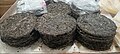 Pyropia
 -
 Pyropia
 -
 Pyropia
 -
 Pyropia


