Religion and alcohol: Difference between revisions
CSV import |
CSV import Tags: mobile edit mobile web edit |
||
| Line 25: | Line 25: | ||
[[Category:Alcohol]] | [[Category:Alcohol]] | ||
{{Religion-stub}} | {{Religion-stub}} | ||
==Religion_and_alcohol== | |||
<gallery> | |||
File:Monk_tasting_wine_from_a_barrel.jpg|Monk tasting wine from a barrel | |||
File:Bacchus_and_Silenus_BM_1899.2-15.1_n02.jpg|Bacchus and Silenus | |||
File:Alcohol_-_its_use_and_abuse_(IA_b28088293).pdf|Religion and alcohol | |||
</gallery> | |||
Latest revision as of 21:23, 20 February 2025
Religion and Alcohol explores the complex and varied relationships between religions and the consumption of alcohol. Throughout history, different religions have held diverse views on alcohol, ranging from strict prohibition to ritual use. This article delves into the perspectives of major world religions on alcohol, highlighting the nuances and historical contexts that have shaped these views.
Buddhism[edit]
In Buddhism, the Fifth Precept advises against the consumption of intoxicating substances, which lead to heedlessness. This precept is interpreted in various ways across different Buddhist traditions. While some Buddhists abstain from alcohol completely, others may interpret the precept more leniently, focusing on the avoidance of intoxication rather than complete abstinence.
Christianity[edit]
Christianity presents a spectrum of views on alcohol. The Bible contains references to wine as both a blessing and a potential source of folly. Some Christian denominations, like the Roman Catholic Church and the Eastern Orthodox Church, use wine in their sacramental rituals, viewing it as a gift from God. Conversely, denominations such as the Baptists and Methodists advocate for temperance or outright prohibition, often citing the potential for alcohol to lead to moral decay and social harm.
Hinduism[edit]
Hinduism's stance on alcohol is varied, influenced by regional practices and the diversity of its followers. Some texts and traditions strictly prohibit the use of intoxicants, associating them with ignorance and impurity. However, in some sects and during certain festivals, the use of alcohol is accepted or even encouraged as part of the festivities.
Islam[edit]
Islam strictly prohibits the consumption of alcohol, considering it haram (forbidden). The Quran explicitly forbids intoxicants, which are seen as impediments to a believer's faith and devotion. This prohibition is widely observed among Muslims, with alcohol being absent from religious and social functions.
Judaism[edit]
In Judaism, alcohol, particularly wine, holds a significant place in religious rituals and celebrations. Wine is used in rituals such as the Kiddush, which sanctifies the Sabbath and Jewish holidays. While moderate consumption is generally accepted, drunkenness is frowned upon, and some Jewish legal texts discuss the negative effects of excessive alcohol consumption.
Sikhism[edit]
Sikhism prohibits the consumption of intoxicants, including alcohol, as they are believed to cloud the mind and distract from one's devotion to God. The Sikh code of conduct, the Sikh Rehat Maryada, explicitly lists intoxicants as one of the major prohibitions for a devout Sikh.
Conclusion[edit]
The relationship between religion and alcohol is deeply intertwined with cultural, historical, and social factors. While some religions view alcohol as a permissible or even essential part of religious life, others prohibit it entirely, emphasizing sobriety as a virtue. Understanding these perspectives requires a nuanced approach that considers the diverse interpretations and practices within each faith tradition.

Religion_and_alcohol[edit]
-
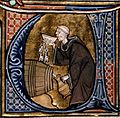 Monk tasting wine from a barrel
 -
 Bacchus and Silenus
 -
 Religion and alcohol


