Health food store: Difference between revisions
CSV import Tags: mobile edit mobile web edit |
CSV import |
||
| Line 31: | Line 31: | ||
{{retail-stub}} | {{retail-stub}} | ||
<gallery> | |||
File:Food_store_at_Marrickville_NSW.jpg|Food store at Marrickville NSW | |||
File:Whole_Foods_Market_in_the_Lower_East_Side_of_New_York.jpg|Whole Foods Market in the Lower East Side of New York | |||
</gallery> | |||
Latest revision as of 21:26, 20 February 2025
Health food store is a type of grocery store or retail outlet that primarily sells health foods, organic foods, local produce, and often nutritional supplements. Health food stores typically offer a wider or more specialized selection of foods than conventional grocery stores for their customers, such as people with special dietary needs.
History[edit]
The concept of health food stores began in the early 20th century as part of the health food movement. Initially, these stores were dedicated to providing foods that were considered healthier alternatives to the products found in conventional grocery stores. This included organic produce, whole grains, vegetarian and vegan options, as well as dietary supplements. Over the decades, the popularity of health food stores has grown, mirroring the public's increasing awareness of health issues and interest in maintaining a healthy lifestyle.
Products[edit]
Health food stores typically offer a variety of products, including:
- Organic fruits and vegetables
- Whole and natural foods
- Dietary supplements and herbal remedies
- Natural body care products and cosmetics
- Eco-friendly cleaning supplies
- Health-oriented books and magazines
Dietary Supplements[edit]
One of the key product categories in health food stores is dietary supplements. These can include vitamins, minerals, herbal supplements, amino acids, and essential fatty acids. Many consumers visit health food stores specifically to purchase supplements that they believe will improve their overall health or target specific health issues.
Organic and Local Produce[edit]
Another significant aspect of health food stores is their focus on providing organic and locally sourced produce. This not only supports local farmers and the local economy but also reduces the environmental impact associated with long-distance transportation of food products. Organic produce is grown without the use of synthetic pesticides and fertilizers, offering a healthier option for consumers and the environment.
Challenges[edit]
Despite their benefits, health food stores face several challenges. The higher cost of organic and natural products can be a barrier for some consumers. Additionally, the increasing availability of health-oriented products in conventional grocery stores and online has intensified competition in the market.
Future Trends[edit]
The future of health food stores looks promising, with a growing number of consumers seeking healthier food options and more sustainable living practices. Innovations in product offerings and a focus on community involvement and education can help health food stores continue to thrive.

-
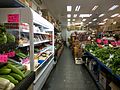 Food store at Marrickville NSW
 -
 Whole Foods Market in the Lower East Side of New York


