Egyptian wine: Difference between revisions
CSV import Tags: mobile edit mobile web edit |
CSV import |
||
| Line 45: | Line 45: | ||
{{food-stub}} | {{food-stub}} | ||
<gallery> | |||
File:EgFoodWines.jpg|Egyptian wine | |||
File:Pergola_Nile_River.jpg|Pergola by the Nile River | |||
File:Ägyptischer_Maler_um_1500_v._Chr._001.jpg|Ancient Egyptian painting | |||
File:Cru_des_Ptolémées.JPG|Cru des Ptolémées | |||
</gallery> | |||
Latest revision as of 04:47, 18 February 2025

Egyptian wine refers to the wine produced in the Egyptian territories. Wine production in Egypt dates back to ancient times, with the country being one of the oldest wine producers in the world. The history of Egyptian wine is deeply intertwined with the country's cultural, religious, and social practices.
History[edit]
The history of wine in Egypt begins in the pre-dynastic period, with evidence suggesting that viticulture was established in the Nile Delta and along the Nile River. Ancient Egyptians used wine for ceremonial purposes, offering it to gods and including it in burial tombs for the afterlife. The wine culture was so significant that there were specific deities dedicated to wine, such as Osiris, the god of the afterlife, who was also associated with vineyard and winemaking.
During the Pharaonic era, wine production flourished. Vineyards were owned by the state, temples, and wealthy individuals. Wine was primarily consumed by the elite, as it was considered a luxury item. The ancient Egyptians developed sophisticated winemaking techniques, and they were among the first to document these practices.
Modern Era[edit]
The modern era of Egyptian wine production began in the late 19th and early 20th centuries when new vineyards were established, and European grape varieties were introduced. This period marked a significant shift in the wine industry, with a focus on producing quality wines that could compete in the international market.
Today, the Egyptian wine industry is experiencing a renaissance, with several wineries producing wines that have received international recognition. The industry faces challenges, including climate change and limited water resources, but it continues to grow, contributing to Egypt's economy and tourism.
Wine Regions[edit]
Egypt's wine regions are primarily located in the Nile Delta and along the Mediterranean coast. The climate in these areas is conducive to grape growing, with warm days and cool nights. The most notable wine-producing regions include:
These regions are home to the majority of Egypt's vineyards and wineries, producing a variety of wines, including red, white, and rosé.
Grape Varieties[edit]
The grape varieties used in Egyptian wine production include both indigenous and international varieties. The most commonly grown grapes include:
Indigenous varieties are also cultivated, though they are less common. These local grapes are often used in blends, adding unique flavors and characteristics to the wines.
Wineries[edit]
Several wineries are leading the resurgence of the Egyptian wine industry, including:
These wineries are at the forefront of innovation, experimenting with new techniques and grape varieties to produce high-quality wines that reflect the unique terroir of Egypt.
Conclusion[edit]
Egyptian wine, with its rich history and promising future, is a testament to the country's enduring relationship with viticulture and winemaking. As the industry continues to evolve, Egyptian wines are gaining recognition on the international stage, offering wine enthusiasts a taste of Egypt's unique heritage and terroir.

-
 Egyptian wine
 -
 Pergola by the Nile River
 -
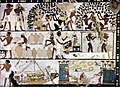 Ancient Egyptian painting
 -
 Cru des Ptolémées


