Therapeutic gene modulation: Difference between revisions
CSV import |
CSV import |
||
| Line 26: | Line 26: | ||
[[Category:Genetic Engineering]] | [[Category:Genetic Engineering]] | ||
{{medicine-stub}} | {{medicine-stub}} | ||
<gallery> | |||
File:TsDNA.png|Therapeutic_gene_modulation | |||
File:Synthetic_polyamide_cartoon.png|Therapeutic_gene_modulation | |||
File:Synthetic_polyamide_mechanism_a.png|Therapeutic_gene_modulation | |||
File:Synthetic_polyamide_mechanism_b.png|Therapeutic_gene_modulation | |||
File:Synthetic_polyamide_mechanism_c.png|Therapeutic_gene_modulation | |||
File:Zinc_finger.png|Therapeutic_gene_modulation | |||
File:Zinc_finger_DNA_complex.png|Therapeutic_gene_modulation | |||
File:Epigenetic_mechanisms.png|Therapeutic_gene_modulation | |||
</gallery> | |||
Latest revision as of 11:20, 18 February 2025
Therapeutic Gene Modulation refers to a set of biotechnology and molecular biology techniques aimed at altering the expression of genes within an organism to achieve a therapeutic effect. This approach is used in the treatment of various genetic disorders, cancer, and infectious diseases, among others. It encompasses a range of methods including gene therapy, RNA interference (RNAi), and the use of CRISPR-Cas9 for genome editing.
Overview[edit]
Therapeutic gene modulation operates on the principle that many diseases are caused at the genetic level, either through genetic mutations that lead to the malfunctioning of proteins, or through the misregulation of gene expression. By correcting these genetic anomalies or modulating gene expression, it is possible to treat or even cure certain diseases. This can be achieved by either adding, editing, or silencing specific genes within the patient's cells.
Techniques[edit]
Gene Therapy[edit]
Gene therapy involves the introduction of healthy genes into cells to replace missing or defective ones, thereby correcting genetic disorders. This is often achieved using vectors, such as viruses, that have been genetically modified to carry therapeutic genes without causing disease.
RNA Interference[edit]
RNA interference (RNAi) is a biological process in which RNA molecules inhibit gene expression or translation, by neutralizing targeted mRNA molecules. It's a powerful tool for silencing specific genes associated with disease.
CRISPR-Cas9[edit]
CRISPR-Cas9 is a revolutionary genome editing tool that allows for the precise modification of DNA within organisms. It can be used to correct mutations, delete or insert specific genes, and has significant potential for the treatment of genetic disorders.
Applications[edit]
Therapeutic gene modulation has a wide range of applications in medicine. It has been explored for the treatment of genetic disorders such as cystic fibrosis, Duchenne muscular dystrophy, and sickle cell disease. In oncology, it offers potential for targeting and silencing genes that cause cancerous growth. Additionally, it has applications in the treatment of infectious diseases, by targeting viral DNA or RNA.
Challenges and Future Directions[edit]
Despite its potential, therapeutic gene modulation faces several challenges. These include delivery issues, where it is difficult to introduce the therapeutic genes or RNA molecules into the right cells in the body, and the risk of off-target effects, where the wrong genes might be edited or silenced. Furthermore, there are ethical and safety concerns regarding gene editing in humans, particularly with germline modifications.
The future of therapeutic gene modulation lies in overcoming these challenges, improving the precision and safety of the techniques, and expanding their application to a wider range of diseases. Ongoing research and clinical trials are crucial for advancing this field and realizing its full therapeutic potential.

-
 Therapeutic_gene_modulation
 -
 Therapeutic_gene_modulation
 -
 Therapeutic_gene_modulation
 -
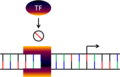 Therapeutic_gene_modulation
 -
Therapeutic_gene_modulation
-
Therapeutic_gene_modulation
-
Therapeutic_gene_modulation
-
Therapeutic_gene_modulation


