Jerusalem syndrome: Difference between revisions
CSV import |
CSV import |
||
| Line 27: | Line 27: | ||
[[Category:Culture-bound syndromes]] | [[Category:Culture-bound syndromes]] | ||
{{Psychiatry-stub}} | {{Psychiatry-stub}} | ||
<gallery> | |||
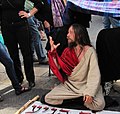
File:Jerusalem_Syndrome.jpg|Jerusalem_syndrome | |||
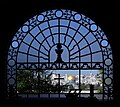
File:Jerusalem_Dominus_flevit_BW_1.JPG|Jerusalem_syndrome | |||
</gallery> | |||
Latest revision as of 01:04, 18 February 2025
Jerusalem syndrome is a group of mental phenomena involving the presence of either religiously themed obsessive ideas, delusions, or other psychosis-like experiences that are triggered by a visit to the city of Jerusalem. It is not endemic to one single religion or denomination but has affected Jews, Christians, and Muslims of many different backgrounds.
Symptoms and Diagnosis[edit]
The syndrome manifests in a variety of symptoms, ranging from anxiety, disorientation, and rapid heartbeat to more severe manifestations such as declaring oneself a biblical figure or experiencing auditory hallucinations. Diagnosis is primarily clinical, based on the patient's history and the absence of previous psychiatric conditions. It is important to differentiate Jerusalem syndrome from pre-existing psychiatric conditions that might be exacerbated by travel to Jerusalem.
Classification[edit]
Jerusalem syndrome can be classified into three major types:
- Type I involves individuals who were previously diagnosed with a psychiatric illness before their visit to Jerusalem. Their visit to the city exacerbates their symptoms.
- Type II is characterized by the manifestation of intense religious experiences or obsessions that are directly related to the significance of Jerusalem in their religious upbringing, without a previous history of psychiatric illness.
- Type III, the most rare, involves previously mentally healthy individuals who, upon visiting Jerusalem, experience a psychotic break with intense religious themes.
Epidemiology[edit]
The exact prevalence of Jerusalem syndrome is unknown due to the transient nature of the condition and the lack of systematic studies. However, it is observed that the syndrome tends to occur more frequently during major religious holidays.
Treatment[edit]
Treatment for Jerusalem syndrome is generally supportive, focusing on reducing the patient's stress and possibly administering antipsychotic medication if the condition is severe. In many cases, simply removing the individual from the environment of Jerusalem can lead to rapid improvement.
Cultural and Religious Context[edit]
Jerusalem holds profound religious significance for Judaism, Christianity, and Islam, which can intensify the psychological impact of the city on visitors. The phenomenon of Jerusalem syndrome underscores the powerful influence of cultural and religious contexts on mental health.
See Also[edit]
.svg)
This article is a psychiatry-related stub. You can help WikiMD by expanding it!
-
 Jerusalem_syndrome
 -
 Jerusalem_syndrome


