Procollagen-proline dioxygenase: Difference between revisions
CSV import Tags: mobile edit mobile web edit |
CSV import |
||
| Line 28: | Line 28: | ||
{{Medicine-stub}} | {{Medicine-stub}} | ||
== Procollagen-proline dioxygenase == | |||
<gallery> | |||
File:Alpha_subunits_of_prolyl_hydroxylase.png|Alpha subunits of prolyl hydroxylase | |||
File:Project_image_2.png|Procollagen-proline dioxygenase | |||
</gallery> | |||
Latest revision as of 01:29, 18 February 2025
Procollagen-proline dioxygenase, also known as prolyl hydroxylase, is an enzyme crucial in the biosynthesis of collagen, which is a fundamental component of connective tissues. This enzyme catalyzes the hydroxylation of proline residues in procollagen to hydroxyproline, a modification necessary for the proper folding and stability of the collagen triple helix structure. The activity of procollagen-proline dioxygenase is essential for the maturation of collagen and, consequently, for the maintenance of the structural integrity of tissues and organs.
Function[edit]
Procollagen-proline dioxygenase plays a pivotal role in the post-translational modification of collagen. Collagen molecules are synthesized as procollagen, which contains unmodified proline and lysine residues. The hydroxylation of proline to hydroxyproline by procollagen-proline dioxygenase is a critical step that contributes to the thermal stability of the collagen triple helix. This modification allows collagen molecules to form stable fibers that are resistant to mechanical forces and degradation. The enzyme requires ascorbic acid (vitamin C) as a cofactor, highlighting the importance of this vitamin in connective tissue health and wound healing.
Structure[edit]
The enzyme is a member of the dioxygenase family and typically exists as a complex composed of two alpha subunits and two beta subunits, the latter being identical to protein disulfide-isomerase. The active site of the enzyme, where the hydroxylation reaction occurs, binds both the procollagen substrate and the ascorbic acid cofactor.
Clinical Significance[edit]
Deficiencies in procollagen-proline dioxygenase activity can lead to a variety of connective tissue disorders. The most well-known condition associated with reduced activity of this enzyme is scurvy, which results from a deficiency in ascorbic acid. Scurvy is characterized by weakened collagenous structures, leading to symptoms such as bleeding gums, bruising, and poor wound healing. Furthermore, mutations affecting the genes encoding the subunits of procollagen-proline dioxygenase can result in rare forms of osteogenesis imperfecta, a group of disorders characterized by brittle bones and other connective tissue symptoms.
Genetics[edit]
The genes encoding the alpha and beta subunits of procollagen-proline dioxygenase are located on different chromosomes. Mutations in these genes can affect the enzyme's structure and function, leading to diseases related to defective collagen synthesis and maturation.
Pharmacology[edit]
Given its crucial role in collagen biosynthesis, procollagen-proline dioxygenase is a target for drug development, particularly in the field of fibrosis. Inhibitors of this enzyme can potentially be used to treat fibrotic diseases by reducing the excessive synthesis of collagen that characterizes these conditions. Conversely, enhancing the activity of procollagen-proline dioxygenase could have therapeutic benefits in diseases caused by insufficient collagen production.
See Also[edit]

Procollagen-proline dioxygenase[edit]
-
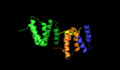 Alpha subunits of prolyl hydroxylase
 -
 Procollagen-proline dioxygenase


