Salah: Difference between revisions
CSV import |
CSV import |
||
| Line 41: | Line 41: | ||
[[Category:Five Pillars of Islam]] | [[Category:Five Pillars of Islam]] | ||
{{Islam-stub}} | {{Islam-stub}} | ||
<gallery> | |||
File:Different postures of a Muslim service.jpg|Different postures of a Muslim service | |||
File:Prayer in Cairo 1865.jpg|Prayer in Cairo 1865 | |||
File:Xonaqoh masjidi namozxona.jpg|Xonaqoh masjidi namozxona | |||
File:Islamic Society of Akron & Kent - women jummah prayer.jpg|Islamic Society of Akron & Kent - women jummah prayer | |||
File:Salattimesturkish.jpg|Salattimesturkish | |||
File:Saying Juma Namaz (Friday prayer for Muslims), Dhaka, Bangladesh NK.JPG|Saying Juma Namaz (Friday prayer for Muslims), Dhaka, Bangladesh | |||
File:Tehran Friday prayer - 16 March 2018 (13961225000386636568071894544919 84859).jpg|Tehran Friday prayer - 16 March 2018 | |||
File:MohrQum1.jpeg|MohrQum1 | |||
</gallery> | |||
Latest revision as of 05:10, 3 March 2025
Salah (Arabic: صلاة, pl. صلوات salawat, lit. "prayer") is one of the Five Pillars of Islam and refers to the Islamic ritual of performing prayers to Allah. It is a physical, mental, and spiritual act of worship that is observed five times a day at prescribed times. These prayers are a direct link between the worshipper and Allah. There is no hierarchical authority in Islam, and no priests, so the prayers are led by a learned person who knows the Quran, chosen by the congregation. This person is called the imam, though in smaller congregational settings, any Muslim can lead the prayer.
Ritual and Significance[edit]
Salah is performed facing the Kaaba in Mecca. It consists of a sequence of movements and recitations, starting with the Takbir (saying "Allahu Akbar" meaning "God is the greatest") and includes recitation of chapters from the Quran, bowing, prostration, and concluding with the Taslim (saying "As-salamu alaykum wa rahmatullah" meaning "Peace and mercy of Allah be upon you"). The prayers are a form of submission to Allah's will and a declaration of faith.
Times of Salah[edit]
The five daily prayers are:
- Fajr – the dawn prayer.
- Dhuhr – the noon prayer.
- Asr – the afternoon prayer.
- Maghrib – the evening prayer after sunset.
- Isha – the night prayer.
Each prayer has a specific number of units called Rak'ah. The Fajr prayer has 2 Rak'ah, Dhuhr has 4, Asr has 4, Maghrib has 3, and Isha has 4.
Preparation for Salah[edit]
Before performing Salah, a Muslim must perform Wudu (ablution) to ensure purity. This involves washing the hands, mouth, nostrils, arms, head, and feet with water. If water is not available, Tayammum (dry purification) can be performed. Additionally, the area where the prayer is to be performed must be clean.
Conditions of Salah[edit]
Salah must be performed in a state of mental and physical purity, facing the Qibla (direction of the Kaaba), and at the prescribed times. Intention (Niyyah) is also a crucial aspect, as it differentiates the acts of worship from mundane activities.
Types of Salah[edit]
Besides the five daily prayers, there are other types of Salah, including:
- Jumu'ah – the Friday congregational prayer, which replaces Dhuhr on Fridays.
- Tarawih – extra prayers performed by Sunni Muslims at night in the Islamic month of Ramadan.
- Tahajjud – voluntary night prayers.
- Salat al-Janazah – the funeral prayer.
See Also[edit]
References[edit]
<references group="" responsive="1"></references>

This article is a Islam-related stub. You can help WikiMD by expanding it!
-
 Different postures of a Muslim service
 -
 Prayer in Cairo 1865
 -
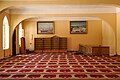 Xonaqoh masjidi namozxona
 -
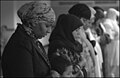 Islamic Society of Akron & Kent - women jummah prayer
 -
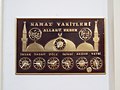 Salattimesturkish
 -
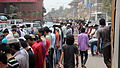 Saying Juma Namaz (Friday prayer for Muslims), Dhaka, Bangladesh
 -
 Tehran Friday prayer - 16 March 2018
 -
 MohrQum1


,_Dhaka,_Bangladesh_NK.JPG)
.jpg)

