Oganesson: Difference between revisions
CSV import |
CSV import |
||
| Line 25: | Line 25: | ||
[[Category:Noble gases]] | [[Category:Noble gases]] | ||
{{Element-stub}} | {{Element-stub}} | ||
<gallery> | |||
File:Oganesson-294_nuclear.svg|Oganesson-294 nuclear structure | |||
File:Yuri_Oganessian_2017_stamp_of_Armenia.jpg|Yuri Oganessian 2017 stamp of Armenia | |||
File:Island_of_Stability_derived_from_Zagrebaev.svg|Island of Stability derived from Zagrebaev | |||
File:Square-planar-3D-balls.png|Oganesson | |||
File:Tetrahedral-3D-balls.png|Oganesson | |||
</gallery> | |||
Latest revision as of 04:53, 18 February 2025
Oganesson (chemical symbol: Og) is a synthetic chemical element with the atomic number 118. It is named after the Russian physicist Yuri Oganessian, who made significant contributions to the discovery of superheavy elements. Oganesson has the highest atomic number and highest atomic mass of all known elements. It is a member of the noble gases, a group of elements known for their lack of reactivity and extremely low chemical activity, although theoretical predictions suggest that Oganesson may behave differently from other noble gases due to relativistic effects.
Discovery[edit]
Oganesson was first synthesized in 2002 by a joint team of Russian and American scientists at the Joint Institute for Nuclear Research (JINR) in Dubna, Russia. The team, led by Yuri Oganessian, produced Oganesson by bombarding atoms of californium (Cf) with ions of calcium (Ca) in a particle accelerator. The discovery was a significant achievement in the field of nuclear chemistry, demonstrating the possibility of creating new elements that do not naturally occur on Earth.
Properties[edit]
Due to its extremely short half-life, measuring in milliseconds, the physical and chemical properties of Oganesson are not well understood. However, theoretical studies suggest that Oganesson may exhibit some unique properties that differ from traditional noble gases. For example, it is predicted to be a solid under standard conditions, unlike other gases in its group. Additionally, its electron configuration is expected to lead to some level of chemical reactivity, challenging the notion that all noble gases are inert.
Isotopes[edit]
All isotopes of Oganesson are radioactive and have very short half-lives. The most stable isotope known is Oganesson-294, with a half-life of about 0.7 milliseconds. The instability of Oganesson's isotopes makes it difficult to study and limits its practical applications.
Applications[edit]
Currently, Oganesson has no practical applications due to its short half-life and the difficulty in producing it. Its significance lies primarily in the field of scientific research, where it contributes to the understanding of nuclear physics and the limits of the periodic table.
See Also[edit]
References[edit]
<references/>

This chemical element related article is a stub. You can help WikiMD by expanding it.
-
 Oganesson-294 nuclear structure
 -
 Yuri Oganessian 2017 stamp of Armenia
 -
 Island of Stability derived from Zagrebaev
 -
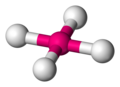 Oganesson
 -
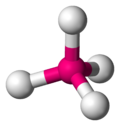 Oganesson


