Friedel–Crafts reaction: Difference between revisions
CSV import Tags: mobile edit mobile web edit |
CSV import |
||
| Line 30: | Line 30: | ||
{{Chemistry-stub}} | {{Chemistry-stub}} | ||
<gallery> | |||
File:Friedel-Crafts_Equation_Overview.svg|Friedel–Crafts reaction | |||
File:Benzene_ethylation.svg|Friedel–Crafts reaction | |||
File:Propylene+C6H6.svg|Friedel–Crafts reaction | |||
File:Friedel-CraftsAlkylationStericProtection.png|Friedel–Crafts reaction | |||
File:Neophyl_chloride_synthesis.svg|Friedel–Crafts reaction | |||
File:Friedel-Crafts-Alkylierung_2.svg|Friedel–Crafts reaction | |||
File:1,3-Diisopropylbenzene_via_transalkylation.svg|Friedel–Crafts reaction | |||
File:Friedel-Crafts-acylation-overview.png|Friedel–Crafts reaction | |||
File:F-C_acylation_mechanism.png|Friedel–Crafts reaction | |||
File:FriedelCraftsHydroAlkylation.png|Friedel–Crafts reaction | |||
File:EthylbenzenePost2000route.svg|Friedel–Crafts reaction | |||
File:Bogert-Cook_Synthesis.png|Friedel–Crafts reaction | |||
</gallery> | |||
Revision as of 12:04, 18 February 2025
Friedel–Crafts Reaction is a set of organic chemistry reactions developed by Charles Friedel and James Crafts in 1877. These reactions are crucial for the formation of carbon-carbon bonds, serving as a cornerstone for the synthesis of complex organic molecules. The Friedel–Crafts reactions are divided into two main types: the alkylation and the acylation reactions. Both types are employed in the synthesis of aromatic compounds, making them invaluable tools in the fields of pharmaceuticals, materials science, and fine chemicals production.
Friedel–Crafts Alkylation
The Friedel–Crafts alkylation involves the addition of an alkyl group to an aromatic ring. This reaction is typically facilitated by a Lewis acid catalyst such as aluminum chloride (AlCl3) or iron(III) chloride (FeCl3). The general mechanism involves the generation of a carbocation from the alkyl halide, which then undergoes an electrophilic aromatic substitution to form the alkylated aromatic compound.
Friedel–Crafts Acylation
In contrast, the Friedel–Crafts acylation entails the introduction of an acyl group into an aromatic ring. This reaction also requires a Lewis acid catalyst, but it uses an acyl chloride as the acylating agent. The acylation reaction is often preferred over alkylation for synthetic purposes because it avoids issues such as polyalkylation and offers better control over the product distribution.
Mechanism
Both the alkylation and acylation reactions proceed through a similar mechanism involving the activation of the alkyl halide or acyl chloride by the Lewis acid catalyst. This activation facilitates the formation of a highly reactive electrophile, which then attacks the aromatic ring to form a sigma complex. Subsequent loss of a proton restores the aromaticity, yielding the final product.
Limitations
Despite their utility, Friedel–Crafts reactions have limitations. They are typically not effective with substrates that are deactivated towards electrophilic substitution, such as nitrobenzenes. Moreover, the reactions can suffer from issues like rearrangement of the carbocation in alkylation reactions, leading to a mixture of products. Additionally, the strong Lewis acid catalysts required for these reactions can lead to side reactions or degradation of sensitive functional groups.
Applications
The Friedel–Crafts reactions have wide-ranging applications in organic synthesis. They are used in the synthesis of important organic compounds, including terpenes, flavonoids, and alkaloids. In the pharmaceutical industry, these reactions are employed in the synthesis of active pharmaceutical ingredients (APIs). They also find applications in the synthesis of polymers and materials science, where the ability to construct complex carbon frameworks is invaluable.
Environmental and Safety Considerations
The use of strong Lewis acids and the generation of acidic waste pose environmental and safety concerns. Recent developments aim to mitigate these issues through the use of more environmentally benign catalysts and solvent systems.
See Also

-
 Friedel–Crafts reaction
 -
 Friedel–Crafts reaction
 -
 Friedel–Crafts reaction
 -
 Friedel–Crafts reaction
 -
 Friedel–Crafts reaction
 -
 Friedel–Crafts reaction
 -
 Friedel–Crafts reaction
 -
 Friedel–Crafts reaction
 -
 Friedel–Crafts reaction
 -
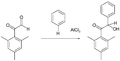 Friedel–Crafts reaction
 -
 Friedel–Crafts reaction
 -
 Friedel–Crafts reaction


