Friedrich Wöhler: Difference between revisions
CSV import Tags: mobile edit mobile web edit |
CSV import |
||
| Line 37: | Line 37: | ||
[[Category:History of chemistry]] | [[Category:History of chemistry]] | ||
{{Chemist-stub}} | {{Chemist-stub}} | ||
<gallery> | |||
File:Friedrich_Wöhler_Litho.jpg|Portrait of Friedrich Wöhler | |||
File:Aluminium-4.jpg|Aluminium sample | |||
File:Beryllium_metal.jpg|Beryllium metal | |||
File:Yttrium_sublimed_dendritic_and_1cm3_cube.jpg|Yttrium sublimed dendritic and 1cm3 cube | |||
File:August_Anton_Wöhler.jpg|August Anton Wöhler | |||
File:Urea_Synthesis_Woehler.png|Urea synthesis by Wöhler | |||
File:DBP_1982_1148_Friedrich_Wöhler.jpg|German postage stamp featuring Friedrich Wöhler | |||
File:Göttingen_Stadtfriedhof_Grab_Friedrich_Wöhler_2.jpg|Grave of Friedrich Wöhler in Göttingen Stadtfriedhof | |||
File:Friedrich-Wöhler-Gymnasium_in_Singen_-_Haupteingang.JPG|Friedrich-Wöhler-Gymnasium in Singen - Main entrance | |||
</gallery> | |||
Revision as of 12:00, 18 February 2025
Friedrich Wöhler (31 July 1800 – 23 September 1882) was a German chemist, best known for his synthesis of urea, an organic compound from inorganic materials, which was a landmark event in the field of organic chemistry. His work is often cited as the starting point of modern organic chemistry. Wöhler's achievements include the isolation of several chemical elements and the discovery of several chemical compounds, making significant contributions to the development of chemistry as a science.
Early Life and Education
Friedrich Wöhler was born in Eschersheim, which is now a part of Frankfurt am Main, Germany. He initially studied medicine at the University of Marburg and later at the University of Heidelberg, where he developed an interest in chemistry. Under the guidance of Leopold Gmelin, Wöhler shifted his focus entirely to chemistry.
Career and Research
After completing his studies, Wöhler worked as an assistant to Jöns Jakob Berzelius in Stockholm, where he was exposed to the forefront of chemical research. This experience was instrumental in shaping his future contributions to chemistry.
In 1828, Wöhler made a groundbreaking discovery by synthesizing urea, an organic compound, from ammonium cyanate, an inorganic compound. This achievement challenged the prevailing belief of the time that organic compounds could only be produced by living organisms. Wöhler's synthesis of urea demonstrated that organic compounds could be made from inorganic materials, thus bridging the gap between organic and inorganic chemistry.
Wöhler's research interests were broad and included the study of metallurgy, the isolation of beryllium and yttrium, and the discovery of calcium carbide and silicon nitride. He also collaborated with Justus von Liebig on the discovery of benzoyl compounds, further contributing to the foundation of organic chemistry.
In addition to his research, Wöhler held several academic positions, including a professorship at the University of Göttingen, where he taught for many years. His work as an educator helped to train a new generation of chemists, spreading his influence throughout the scientific community.
Legacy
Friedrich Wöhler's contributions to chemistry are considered monumental. His synthesis of urea not only challenged existing theories about the nature of organic compounds but also paved the way for the development of organic chemistry as a distinct field of study. Today, Wöhler is remembered as a pioneer who helped to bridge the divide between life sciences and physical sciences.
Wöhler received numerous honors for his work, including membership in various scientific societies and awards from academic institutions around the world. His legacy is preserved in the Wöhler synthesis of urea, which remains a fundamental experiment in the study of organic chemistry.
Selected Works
- Synthesis of Urea (1828)
- Isolation of Beryllium (1828)
- Discovery of Calcium Carbide
- Research on Silicon Nitride
See Also
References
<references/>
.jpg)
-
 Portrait of Friedrich Wöhler
 -
 Aluminium sample
 -
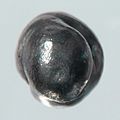 Beryllium metal
 -
 Yttrium sublimed dendritic and 1cm3 cube
 -
 August Anton Wöhler
 -
 Urea synthesis by Wöhler
 -
German postage stamp featuring Friedrich Wöhler
-
 Grave of Friedrich Wöhler in Göttingen Stadtfriedhof
 -
 Friedrich-Wöhler-Gymnasium in Singen - Main entrance


