Da Costa's syndrome: Difference between revisions
CSV import Tags: mobile edit mobile web edit |
CSV import Tags: mobile edit mobile web edit |
||
| Line 51: | Line 51: | ||
{{Cardiology-stub}} | {{Cardiology-stub}} | ||
<gallery> | |||
File:In_this_undated_file_photo,_U.S._Army_Capt._Emil_Kapaun,_right,_a_chaplain_with_the_3rd_Battalion,_8th_Cavalry_Regiment,_1st_Cavalry_Division,_helps_a_Soldier_carry_an_exhausted_troop_off_the_battlefield_130311-A-CP123-001.jpg|In this undated file photo, U.S. Army Capt. Emil Kapaun, right, a chaplain with the 3rd Battalion, 8th Cavalry Regiment, 1st Cavalry Division, helps a Soldier carry an exhausted troop off the battlefield. | |||
</gallery> | |||
Revision as of 01:49, 17 February 2025
Da Costa's Syndrome (also known as Effort Syndrome, Soldier's Heart, and Neurocirculatory Asthenia) is a condition characterized by a set of symptoms that include fatigue, shortness of breath, palpitations, and chest pain. The syndrome was first described by Jacob Mendes Da Costa in 1871, during the American Civil War. It is considered a type of functional cardiac disorder and is often associated with anxiety or stress.
Symptoms
The primary symptoms of Da Costa's Syndrome include:
- Fatigue, especially after physical exertion
- Shortness of breath or dyspnea
- Palpitations or irregular heartbeats
- Chest pain that is not related to coronary artery disease
- Dizziness or lightheadedness
Patients may also experience additional symptoms such as:
- Anxiety or panic attacks
- Hyperventilation
- Cold, clammy hands and feet
- Digestive disturbances
Causes
The exact cause of Da Costa's Syndrome is not well understood, but it is believed to be related to the autonomic nervous system's response to stress or emotional factors. It is not caused by structural heart disease or other physical disorders. Factors that may contribute to the development of the syndrome include:
- Psychological stress or anxiety
- Physical exhaustion or overexertion
- Traumatic experiences, such as those encountered in military combat
Diagnosis
Diagnosis of Da Costa's Syndrome is primarily based on the patient's symptoms and medical history, as there are no specific tests for the condition. Physicians may perform various tests to rule out other potential causes of the symptoms, such as:
- Electrocardiogram (ECG) to check for heart rhythm abnormalities
- Echocardiogram to assess heart structure and function
- Stress tests to evaluate cardiovascular response to exercise
Treatment
Treatment for Da Costa's Syndrome focuses on managing symptoms and may include:
- Lifestyle modifications, such as regular exercise and stress reduction techniques
- Cognitive-behavioral therapy (CBT) to address anxiety or panic disorders
- Medications, including beta-blockers to manage palpitations and antidepressants for anxiety
Prognosis
The prognosis for individuals with Da Costa's Syndrome is generally good, with many patients experiencing improvement in symptoms with appropriate treatment and lifestyle changes. However, some individuals may continue to experience symptoms over the long term.
History
The syndrome was first described by Jacob Mendes Da Costa in 1871, who observed the condition in soldiers during the American Civil War. It has been known by various names over the years, including Soldier's Heart and Effort Syndrome, reflecting the condition's association with military service and physical exertion.
See Also

This article is a cardiovascular system stub. You can help WikiMD by expanding it!
-
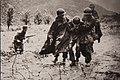 In this undated file photo, U.S. Army Capt. Emil Kapaun, right, a chaplain with the 3rd Battalion, 8th Cavalry Regiment, 1st Cavalry Division, helps a Soldier carry an exhausted troop off the battlefield.

