Axillary nerve dysfunction: Difference between revisions
CSV import |
CSV import |
||
| Line 38: | Line 38: | ||
{{Neuro-stub}} | {{Neuro-stub}} | ||
<gallery> | |||
File:Slide12dj.JPG|Axillary nerve dysfunction | |||
</gallery> | |||
Revision as of 01:38, 20 February 2025
Axillary Nerve Dysfunction
Axillary nerve dysfunction, also known as axillary neuropathy, is a condition characterized by damage or dysfunction in the axillary nerve, which can lead to motor and sensory disturbances in the shoulder region. This nerve plays a crucial role in the innervation of the deltoid and teres minor muscles and provides sensation to a part of the shoulder. Dysfunction of this nerve can result from various causes, including trauma, compression, or systemic diseases, leading to a range of symptoms that can significantly impact an individual's quality of life.
Causes
The axillary nerve can be compromised due to several factors:
- Trauma: Direct injury to the shoulder, such as fractures of the humeral neck, can damage the axillary nerve.
- Compression: Prolonged use of crutches or carrying heavy backpacks can compress the nerve, leading to dysfunction.
- Surgical procedures: Surgeries involving the shoulder or axilla may inadvertently affect the axillary nerve.
- Systemic diseases: Conditions like diabetes or autoimmune diseases can cause neuropathies, including axillary nerve dysfunction.
Symptoms
Symptoms of axillary nerve dysfunction may include:
- Weakness in the shoulder, especially in lifting the arm away from the body.
- Numbness or sensory changes in the skin over the deltoid muscle.
- Muscle wasting in severe or prolonged cases, particularly of the deltoid muscle.
Diagnosis
Diagnosis of axillary nerve dysfunction involves a combination of clinical evaluation and diagnostic tests:
- Clinical examination: Assessing muscle strength, reflexes, and sensory testing in the shoulder area.
- Electromyography (EMG) and Nerve Conduction Studies (NCS): These tests evaluate the electrical activity of muscles and the speed of nerve signal conduction, respectively, to confirm the diagnosis.
- Imaging: MRI or ultrasound may be used to visualize the path of the axillary nerve and identify any compressive lesions or structural abnormalities.
Treatment
Treatment options vary based on the underlying cause of the dysfunction and the severity of symptoms:
- Conservative management: Includes physical therapy to strengthen the shoulder muscles and improve range of motion. Pain management may involve medications or nerve blocks.
- Surgical intervention: May be necessary to relieve nerve compression or repair nerve damage, especially in cases of traumatic injury or when conservative measures fail to improve symptoms.
Prognosis
The prognosis for individuals with axillary nerve dysfunction depends on the cause and extent of the nerve damage. Early diagnosis and treatment can improve outcomes, with many patients experiencing partial or complete recovery of nerve function.
Prevention
Preventive measures for axillary nerve dysfunction focus on minimizing risk factors, such as avoiding prolonged pressure on the shoulder region and using protective gear during activities that pose a risk of shoulder injury.

This article is a neuroscience stub. You can help WikiMD by expanding it!
-
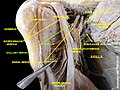 Axillary nerve dysfunction

