Argus retinal prosthesis: Difference between revisions
CSV import Tags: mobile edit mobile web edit |
CSV import |
||
| Line 1: | Line 1: | ||
== Apfelwein == | |||
'''Apfelwein''', also known as '''cider''', is a traditional alcoholic beverage made from fermented apple juice. It is particularly popular in the [[Hesse]] region of [[Germany]], especially around the city of [[Frankfurt]]. Apfelwein is known for its tart, refreshing taste and is often enjoyed in social settings. | |||
== | == Production == | ||
The production of Apfelwein involves several key steps. First, apples are harvested and pressed to extract the juice. This juice is then fermented, typically using wild yeasts, although cultivated yeasts may also be used to control the fermentation process. The fermentation can take several weeks to months, depending on the desired flavor profile and alcohol content. | |||
== | === Pressing === | ||
The pressing of apples is a crucial step in Apfelwein production. Traditional presses, known as ''Kelter'', are often used. These presses can be seen in various cider houses and are a symbol of the Apfelwein culture. | |||
[[File:Kelterstation-fisch.JPG|thumb|Traditional apple press used in Apfelwein production]] | |||
== | === Fermentation === | ||
[[Category: | After pressing, the apple juice is transferred to fermentation vessels. The fermentation process converts the sugars in the juice into alcohol and carbon dioxide. The resulting beverage is typically around 5-7% alcohol by volume. | ||
[[Category: | |||
[[Category: | == Serving == | ||
Apfelwein is traditionally served in a ''Geripptes'', a ribbed glass that enhances the grip and aesthetic of the drink. It is often poured from a ''Bembel'', a stoneware jug that keeps the beverage cool. | |||
[[File:Apfelwein_Geripptes_Bembel.jpg|thumb|A Geripptes glass and Bembel jug used for serving Apfelwein]] | |||
== Cultural Significance == | |||
Apfelwein holds a special place in the culture of Hesse. It is not only a popular drink but also a part of local traditions and festivals. The ''Viezstraße'' is a famous cider route that highlights the cultural and historical significance of Apfelwein in the region. | |||
[[File:Viezstrasse-tafel.jpg|thumb|Signpost along the Viezstraße, a cider route]] | |||
== Variations == | |||
There are several variations of Apfelwein, depending on the type of apples used and the production methods. Some producers add other fruits or spices to create unique flavors. ''Speierling'' is a variety made with the addition of service tree berries, which adds a distinct taste. | |||
== Related Pages == | |||
* [[Cider]] | |||
* [[Fermentation]] | |||
* [[Alcoholic beverage]] | |||
* [[Hesse]] | |||
== Gallery == | |||
<gallery> | |||
File:Heil_Eschbacher_Traditions_Apfelwein.jpg|Heil Eschbacher Traditions Apfelwein | |||
File:Höhl_Der_alte_Hochstädter_Speyerling_Apfelwein.jpg|Höhl Der alte Hochstädter Speyerling Apfelwein | |||
File:Kelterei_Heil_Apfelwein_Speierling.jpg|Kelterei Heil Apfelwein Speierling | |||
File:Müller_Speierling_Apfelwein.jpg|Müller Speierling Apfelwein | |||
File:Müller_Wetterauer_Apfelwein.jpg|Müller Wetterauer Apfelwein | |||
File:Possmann_Frankfurter_Apfelwein.jpg|Possmann Frankfurter Apfelwein | |||
File:Possmann_Frau_Rauscher_Speierling.jpg|Possmann Frau Rauscher Speierling | |||
File:Rapp's_Meisterschoppen_Naturtrüb.jpg|Rapp's Meisterschoppen Naturtrüb | |||
File:Rapp's_Wetterauer_Gold_Apfelwein.jpg|Rapp's Wetterauer Gold Apfelwein | |||
File:Uhl_Apfelwein.jpg|Uhl Apfelwein | |||
</gallery> | |||
[[Category:German cuisine]] | |||
[[Category:Alcoholic drinks]] | |||
[[Category:Cider]] | |||
Revision as of 18:00, 11 February 2025
Apfelwein
Apfelwein, also known as cider, is a traditional alcoholic beverage made from fermented apple juice. It is particularly popular in the Hesse region of Germany, especially around the city of Frankfurt. Apfelwein is known for its tart, refreshing taste and is often enjoyed in social settings.
Production
The production of Apfelwein involves several key steps. First, apples are harvested and pressed to extract the juice. This juice is then fermented, typically using wild yeasts, although cultivated yeasts may also be used to control the fermentation process. The fermentation can take several weeks to months, depending on the desired flavor profile and alcohol content.
Pressing
The pressing of apples is a crucial step in Apfelwein production. Traditional presses, known as Kelter, are often used. These presses can be seen in various cider houses and are a symbol of the Apfelwein culture.

Fermentation
After pressing, the apple juice is transferred to fermentation vessels. The fermentation process converts the sugars in the juice into alcohol and carbon dioxide. The resulting beverage is typically around 5-7% alcohol by volume.
Serving
Apfelwein is traditionally served in a Geripptes, a ribbed glass that enhances the grip and aesthetic of the drink. It is often poured from a Bembel, a stoneware jug that keeps the beverage cool.

Cultural Significance
Apfelwein holds a special place in the culture of Hesse. It is not only a popular drink but also a part of local traditions and festivals. The Viezstraße is a famous cider route that highlights the cultural and historical significance of Apfelwein in the region.

Variations
There are several variations of Apfelwein, depending on the type of apples used and the production methods. Some producers add other fruits or spices to create unique flavors. Speierling is a variety made with the addition of service tree berries, which adds a distinct taste.
Related Pages
Gallery
-
 Heil Eschbacher Traditions Apfelwein
 -
 Höhl Der alte Hochstädter Speyerling Apfelwein
 -
 Kelterei Heil Apfelwein Speierling
 -
 Müller Speierling Apfelwein
 -
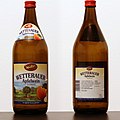 Müller Wetterauer Apfelwein
 -
 Possmann Frankfurter Apfelwein
 -
 Possmann Frau Rauscher Speierling
 -
 Rapp's Meisterschoppen Naturtrüb
 -
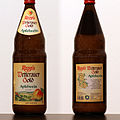 Rapp's Wetterauer Gold Apfelwein
 -
 Uhl Apfelwein


