Tip link: Difference between revisions
CSV import |
CSV import Tags: mobile edit mobile web edit |
||
| Line 24: | Line 24: | ||
{{anatomy-stub}} | {{anatomy-stub}} | ||
== Tip link == | |||
<gallery> | |||
File:The_Tailchaser_mutation_does_not_affect_formation_of_interstereocilial_links.png|The Tailchaser mutation does not affect formation of interstereocilial links | |||
</gallery> | |||
Latest revision as of 01:45, 17 February 2025
Tip Link is a term used in various fields of medicine, particularly in the context of anatomy, surgery, and medical imaging. It refers to the connection or junction between two structures or components. The specific meaning of "tip link" can vary depending on the context.
Anatomy[edit]
In the field of anatomy, a tip link is a filamentous structure that connects the tips of adjacent stereocilia in the sensory cells of the inner ear. These tip links play a crucial role in the mechanotransduction process, which is the conversion of mechanical stimuli into electrical signals. When sound waves cause the stereocilia to move, the tension in the tip links opens ion channels, leading to the generation of an electrical signal that is transmitted to the brain.
Surgery[edit]
In surgery, a tip link can refer to a connection between the tip of a surgical instrument and the tissue being operated on. This link is important for the surgeon to maintain control over the instrument and to manipulate the tissue in a precise manner.
Medical Imaging[edit]
In the field of medical imaging, a tip link can refer to a connection between the tip of an imaging probe and the tissue being imaged. This link is important for maintaining the correct position and orientation of the probe, and for ensuring that the images obtained are of the highest possible quality.
See Also[edit]
References[edit]
<references />

Tip link[edit]
-
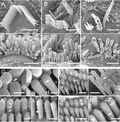 The Tailchaser mutation does not affect formation of interstereocilial links

