Jjim: Difference between revisions
CSV import Tags: mobile edit mobile web edit |
CSV import |
||
| Line 23: | Line 23: | ||
{{food-stub}} | {{food-stub}} | ||
<gallery> | |||
File:Korean.food-Agu.jjim-01.jpg|Agujjim (spicy braised monkfish) | |||
File:Korean_braised_beef_short_ribs-Galbijjim-02.jpg|Galbijjim (braised beef short ribs) | |||
File:Korean_cuisine-Saengseon_jjim-01.jpg|Saengseon jjim (braised fish) | |||
File:Mugeun-ji-jjim.jpg|Mugeun-ji jjim (braised aged kimchi) | |||
File:1005_eggjjim.jpg|Gyeran jjim (steamed egg) | |||
File:Korean.food-Dubujjim-02.jpg|Dubujjim (braised tofu) | |||
</gallery> | |||
Latest revision as of 10:59, 18 February 2025
Jjim is a traditional Korean steaming method used in the preparation of various dishes. While not directly related to medical or pharmacological fields, it has been associated with health benefits due to the ingredients often used in jjim dishes.
Overview[edit]
Jjim is a cooking technique that involves steaming food at high temperatures. This method is commonly used in Korean cuisine to prepare a variety of dishes, including meats, seafood, and vegetables. The process of jjim involves marinating the ingredients in a sauce before steaming, which allows the flavors to penetrate deeply into the food.
Health Benefits[edit]
While jjim is primarily a culinary technique, the health benefits of the dishes prepared using this method are noteworthy. Many jjim dishes incorporate ingredients known for their health-promoting properties. For example, ginseng chicken jjim is a popular dish that includes ginseng, a herb renowned for its medicinal properties.
Preparation and Ingredients[edit]
The preparation of jjim dishes involves marinating the main ingredients in a mixture of soy sauce, sesame oil, garlic, and other seasonings. This marinade not only adds flavor but also helps to tenderize the food. Common ingredients used in jjim dishes include beef, chicken, seafood, and various vegetables.
Cultural Significance[edit]
Jjim dishes hold a significant place in Korean culture. They are often served on special occasions and are considered a symbol of hospitality. The preparation of jjim dishes requires time and effort, which is why they are often associated with celebrations and gatherings.
See Also[edit]

-
 Agujjim (spicy braised monkfish)
 -
 Galbijjim (braised beef short ribs)
 -
 Saengseon jjim (braised fish)
 -
Mugeun-ji jjim (braised aged kimchi)
-
 Gyeran jjim (steamed egg)
 -
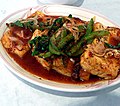 Dubujjim (braised tofu)


