Psychoactive plant: Difference between revisions
CSV import |
CSV import |
||
| Line 34: | Line 34: | ||
[[Category:Pharmacology]] | [[Category:Pharmacology]] | ||
{{pharmacology-stub}} | {{pharmacology-stub}} | ||
<gallery> | |||
File:Tabak_P9290021.JPG|Psychoactive_plant | |||
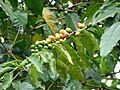
File:Starr_070308-5472_Coffea_arabica.jpg|Psychoactive_plant | |||
File:Caffeine-2D-skeletal.svg|Psychoactive_plant | |||
File:Tabak_P9290021.JPG|Psychoactive_plant | |||
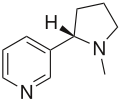
File:Nicotine.svg|Psychoactive_plant | |||
File:Cannabis_sativa_plant_(4).JPG|Psychoactive_plant | |||
File:Tetrahydrocannabinol.svg|Psychoactive_plant | |||
File:Colcoca03.jpg|Psychoactive_plant | |||
File:Kokain_-_Cocaine.svg|Psychoactive_plant | |||
File:Opium_pod_cut_to_demonstrate_fluid_extraction1.jpg|Psychoactive_plant | |||
File:Morphin_-_Morphine.svg|Psychoactive_plant | |||
File:Peyote_Cactus.jpg|Psychoactive_plant | |||
</gallery> | |||
Latest revision as of 11:47, 18 February 2025
Psychoactive plants are plants that have psychoactive substances in them. These substances can alter one's consciousness, mood, or perception. The use of psychoactive plants dates back to prehistoric times and continues to this day in various cultures and societies around the world.
History[edit]
The use of psychoactive plants in rituals and for medicinal purposes has been a part of human culture for thousands of years. Evidence of this can be found in ancient cave paintings and archaeological sites. Some of the earliest known uses of psychoactive plants were by the indigenous peoples of the Americas.
Types of Psychoactive Plants[edit]
There are many different types of psychoactive plants, each with its own unique properties and effects. Some of the most well-known include:
- Cannabis: This plant contains the psychoactive substance tetrahydrocannabinol (THC), which can produce feelings of euphoria, relaxation, and altered perception.
- Peyote: This small cactus contains the psychoactive substance mescaline, which can cause hallucinations and altered perception.
- Psilocybin mushrooms: These mushrooms contain the psychoactive substance psilocybin, which can cause hallucinations and profound changes in consciousness.
- Ayahuasca: This brew made from various plants contains the psychoactive substances dimethyltryptamine (DMT) and monoamine oxidase inhibitors (MAOIs), which can cause intense hallucinations and spiritual experiences.
Effects[edit]
The effects of psychoactive plants can vary greatly depending on the type of plant, the dosage, the method of consumption, and the individual's personal physiology and psychology. Some common effects include changes in perception, mood, consciousness, cognition, and behavior. These effects can be therapeutic, recreational, spiritual, or harmful, depending on the context.
Risks and Controversies[edit]
The use of psychoactive plants is not without risks. Some plants can cause physical harm, such as poisoning or addiction. Others can cause psychological harm, such as anxiety, psychosis, or trauma. The use of psychoactive plants is also controversial due to legal, ethical, and societal issues.
See Also[edit]
References[edit]
<references />

-
 Psychoactive_plant
 -
 Psychoactive_plant
 -
 Psychoactive_plant
 -
Psychoactive_plant
-
 Psychoactive_plant
 -
 Psychoactive_plant
 -
 Psychoactive_plant
 -
Psychoactive_plant
-
Psychoactive_plant
-
Psychoactive_plant
-
Psychoactive_plant
-
Psychoactive_plant


.JPG)


