Viola sororia: Difference between revisions
CSV import |
CSV import Tags: mobile edit mobile web edit |
||
| Line 21: | Line 21: | ||
[[Category:Viola (plant)]] | [[Category:Viola (plant)]] | ||
{{Flora-stub}} | {{Flora-stub}} | ||
<gallery> | |||
File:Viola_sororia_in_Wisconsin.jpg|Viola sororia in Wisconsin | |||
File:CATU_herbarium_V_sororia.jpg|Herbarium specimen of Viola sororia | |||
File:Common_Blue_Violet_(Viola_sororia)_color_variant.jpg|Color variant of Common Blue Violet (Viola sororia) | |||
File:Viola_septentrionalis_009.jpg|Viola sororia | |||
</gallery> | |||
Latest revision as of 04:59, 18 February 2025
Viola sororia, also known as the common blue violet, is a species of the Viola genus that is native to eastern North America. It is a state flower of Illinois, Rhode Island, New Jersey, and Wisconsin.
Description[edit]
Viola sororia is a perennial plant that typically grows to 10–20 cm in height. The leaves are heart-shaped, and the flowers are violet in color, although there are also white and yellow varieties. The plant blooms from April to June.
Habitat and Distribution[edit]
Viola sororia is found in a variety of habitats, including meadows, open woods, and along roadsides. It is native to eastern North America and is most common in the Midwest and Atlantic states.
Cultivation and Uses[edit]
Viola sororia is often grown as a groundcover in gardens for its attractive foliage and flowers. It is also used in traditional medicine for its purported healing properties.
Conservation Status[edit]
Viola sororia is not considered to be at risk of extinction. However, like all wildflowers, it is protected in many areas and should not be picked without permission.
See Also[edit]

This flora-related article is a stub. You can help WikiMD by expanding it.
-
 Viola sororia in Wisconsin
 -
 Herbarium specimen of Viola sororia
 -
 Color variant of Common Blue Violet (Viola sororia)
 -
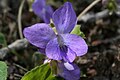 Viola sororia


_color_variant.jpg)

