White wine: Difference between revisions
CSV import |
CSV import |
||
| Line 26: | Line 26: | ||
{{Wine-stub}} | {{Wine-stub}} | ||
== White_wine == | |||
<gallery> | |||
File:White_Wine_Glass.jpg|White wine | |||
File:Preparing_a_wine_tasting_flight_at_a_tasting_bar.jpg|Preparing a wine tasting flight at a tasting bar | |||
File:Warpalawa_Ivris.jpg|White wine | |||
File:Fabrication_du_verjus_BnF_Latin_9333_fol._83.jpg|White wine | |||
File:Barrio_medieval_de_El_Muelle_de_las_Carabelas.jpg|White wine | |||
File:Weinkeller_Tokai.png|White wine | |||
File:Champagne_Vineyards.jpg|White wine | |||
File:Schweicher_Annaberg.jpg|White wine | |||
File:Freyburg_-_Weinberg_über_der_Unstrut.jpg|White wine | |||
File:Tokaj,_Hungary_03944.JPG|White wine | |||
File:Chardonnay.jpg|Chardonnay | |||
File:Riesling_grapes_leaves.jpg|Riesling grapes leaves | |||
</gallery> | |||
Revision as of 11:50, 18 February 2025
White wine is a type of wine produced from the fermentation of non-coloured pulp of grapes. The actual colour of white wine can vary from a pale yellow to a rich golden hue, depending on the grape variety used and the aging process.
History
The history of white wine is intertwined with the overall history of wine. The earliest known production of wine, dating back to 6000 BC, was likely a white wine, as the grapes used were of a green variety. The Ancient Greeks and Romans were known to produce white wines, which they often flavoured with herbs and spices.
Production
White wine is produced by the alcoholic fermentation of the non-coloured pulp of grapes, which may have a skin of any colour. White wine has existed for at least 2500 years. The wide variety of white wines comes from the large number of varieties, methods of winemaking, and ratios of residual sugar. White wine is made from the grape juice and grape skin of green, gold or yellowish colored grapes or from just the juice (not the skin) of select red grapes (like Pinot noir, Grenache).
Types of White Wine
There are many different types of white wine, including Chardonnay, Sauvignon Blanc, Semillon, Moscato, Pinot Grigio, Gewurztraminer, and Riesling. Each type of white wine has its own unique flavor profile, which can range from very dry to sweet and from light to full-bodied.
Food Pairing
White wines are often consumed on their own, but they can also be paired with a variety of foods. Lighter, more acidic white wines like Sauvignon Blanc or Pinot Grigio tend to pair well with seafood, poultry, and salads. Richer, fuller-bodied white wines like Chardonnay or Semillon can stand up to heavier dishes like roasted meats, creamy sauces, and rich desserts.
Health Effects
Like all wines, white wine contains alcohol, which can have both positive and negative health effects. Moderate consumption of white wine has been linked to certain health benefits, such as improved heart health and longevity. However, excessive consumption can lead to a variety of health problems, including liver disease and increased risk of certain types of cancer.

White_wine
-
 White wine
 -
 Preparing a wine tasting flight at a tasting bar
 -
 White wine
 -
 White wine
 -
 White wine
 -
 White wine
 -
 White wine
 -
 White wine
 -
 White wine
 -
 White wine
 -
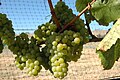 Chardonnay
 -
 Riesling grapes leaves


