Water purification: Difference between revisions
CSV import Tags: mobile edit mobile web edit |
CSV import |
||
| Line 32: | Line 32: | ||
[[Category:Public health]] | [[Category:Public health]] | ||
{{Water-stub}} | {{Water-stub}} | ||
<gallery> | |||
File:Illustration_of_a_typical_drinking_water_treatment_process.png|Illustration of a typical drinking water treatment process | |||
File:Station_for_complex_water_treatment_SKO-10K.jpg|Station for complex water treatment SKO-10K | |||
File:Rapid_sand_filter_EPA.jpg|Rapid sand filter EPA | |||
File:Backwashing_demo_at_a_water_filtration_plant.webm|Backwashing demo at a water filtration plant | |||
File:Vsakovací_nádrže_umělé_infiltrace_v_ÚV_Káraný.jpg|Vsakovací nádrže umělé infiltrace v ÚV Káraný | |||
File:Slow_sand_filter_profile.jpg|Slow sand filter profile | |||
File:Chemical_pumps_at_water_purification_plant.JPG|Chemical pumps at water purification plant | |||
File:Cutaway_model_of_UV_disinfection_unit_used_in_NEWater_water_treatment_plants.jpg|Cutaway model of UV disinfection unit used in NEWater water treatment plants | |||
File:Detektor_znečištění_pstruh_duhový_ÚV_Káraný.jpg|Detektor znečištění pstruh duhový ÚV Káraný | |||
File:Jakob_Ziegler_1799_Bemerkungen_über_gemeines_Wasser_detail.jpg|Jakob Ziegler 1799 Bemerkungen über gemeines Wasser detail | |||
File:Snow-cholera-map-1.jpg|Snow cholera map 1 | |||
File:Manual_Control_Chlorinator.jpg|Manual Control Chlorinator | |||
</gallery> | |||
Latest revision as of 21:13, 23 February 2025
Water purification is the process of removing undesirable chemicals, biological contaminants, suspended solids, and gases from water. The goal is to produce water fit for specific purposes. Most water is purified and disinfected for human consumption (drinking water), but water purification may also be carried out for a variety of other purposes, including medical, pharmacological, chemical, and industrial applications. The methods used include physical processes such as filtration, sedimentation, and distillation; biological processes such as slow sand filters or biologically active carbon; chemical processes such as flocculation and chlorination; and the use of electromagnetic radiation such as ultraviolet light.
Methods[edit]
Water purification methods vary widely, and the method chosen often depends on the nature of the water source and the intended use of the water.
Physical processes[edit]
Physical processes include sedimentation, filtration, and distillation. Sedimentation involves the settling of suspended particles, often after the addition of a chemical flocculant. Filtration can be through granular media, such as sand or activated carbon, or through membranes, such as those used in reverse osmosis. Distillation involves boiling the water and then condensing the steam.
Biological processes[edit]
Biological processes use organisms to remove contaminants. Slow sand filters rely on biological activity in a layer of sand to filter out particles and microorganisms. Biologically active carbon filters use a similar process, but with activated carbon as the medium.
Chemical processes[edit]
Chemical processes include flocculation, in which a chemical is added that causes particles to clump together and settle out of the water, and chlorination, which kills microorganisms.
Electromagnetic radiation[edit]
Ultraviolet light can be used to kill microorganisms in water. This is often used in combination with other purification methods.
Health effects[edit]
The purification of water is a crucial step in preventing waterborne diseases. Some waterborne diseases include cholera, typhoid, and dysentery.
Environmental impact[edit]
Water purification processes can have an environmental impact, particularly in terms of the energy used and the disposal of residual sludge.
See also[edit]

This article is a water supply–related stub. You can help WikiMD by expanding it!
-
 Illustration of a typical drinking water treatment process
 -
 Station for complex water treatment SKO-10K
 -
 Rapid sand filter EPA
 -
 Backwashing demo at a water filtration plant
 -
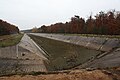 Vsakovací nádrže umělé infiltrace v ÚV Káraný
 -
 Slow sand filter profile
 -
 Chemical pumps at water purification plant
 -
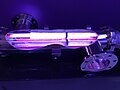 Cutaway model of UV disinfection unit used in NEWater water treatment plants
 -
 Detektor znečištění pstruh duhový ÚV Káraný
 -
 Jakob Ziegler 1799 Bemerkungen über gemeines Wasser detail
 -
 Snow cholera map 1
 -
 Manual Control Chlorinator


