Vitis coignetiae: Difference between revisions
CSV import Tags: mobile edit mobile web edit |
CSV import |
||
| Line 18: | Line 18: | ||
[[Category:Flora of East Asia]] | [[Category:Flora of East Asia]] | ||
{{Vitaceae-stub}} | {{Vitaceae-stub}} | ||
<gallery> | |||
File:Vitis_Coignetiae_DSCN3786.TIF|Vitis coignetiae | |||
File:Vitis_coignetiae_(fruits).jpg|Vitis coignetiae fruits | |||
File:Vitis_coignetiae_leaves.jpeg|Vitis coignetiae leaves | |||
File:Vitis_coignetiae_vine.jpeg|Vitis coignetiae vine | |||
File:Vitis_coignetiae_cluster.jpeg|Vitis coignetiae cluster | |||
File:Vitis_coignetiae_berries.jpeg|Vitis coignetiae berries | |||
File:Ornamental_grape.jpg|Ornamental grape | |||
File:Château_de_Breteuil_2010_071.jpg|Château de Breteuil | |||
</gallery> | |||
Latest revision as of 11:24, 18 February 2025
Vitis coignetiae, commonly known as the Crimson Glory Vine, is a species of flowering plant in the grape family Vitaceae. Native to the temperate regions of East Asia, including Japan, Korea, and the Russian Far East, it is a deciduous climbing vine, known for its brilliant autumn foliage.
Description[edit]
Vitis coignetiae is a large, vigorous deciduous climber that can reach up to 15 meters in height. The leaves are heart-shaped, 15-30 cm long and wide, and turn a brilliant red in autumn. The flowers are small, greenish-white, and are followed by small, inedible black grapes.
Cultivation and uses[edit]
Vitis coignetiae is grown as an ornamental plant for its bold foliage and autumn color. It is hardy and can grow in a variety of soils, but prefers a sunny, sheltered position. It is also used as a rootstock for grafting other grape varieties.
Taxonomy[edit]
The species was first described by the French botanist Jules Émile Planchon in 1887. The specific epithet coignetiae honors the French botanist Coignet.
See also[edit]

-
 Vitis coignetiae
 -
 Vitis coignetiae fruits
 -
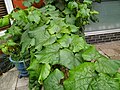 Vitis coignetiae leaves
 -
 Vitis coignetiae vine
 -
 Vitis coignetiae cluster
 -
 Vitis coignetiae berries
 -
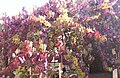 Ornamental grape
 -
 Château de Breteuil
.jpg)


