Grifola frondosa: Difference between revisions
CSV import |
CSV import |
||
| Line 26: | Line 26: | ||
{{SouthAmerica-stub}} | {{SouthAmerica-stub}} | ||
{{Medicine-stub}} | {{Medicine-stub}} | ||
<gallery> | |||
File:Klapperschwamm.jpg|Grifola frondosa | |||
File:Maitake_mushroom.jpg|Grifola frondosa | |||
File:Grifola_frondosa_cross-section.jpg|Grifola frondosa cross-section | |||
File:Grifola_frondosa_2014_G3.jpg|Grifola frondosa | |||
File:Maitake_Mushroom_Tempura_2021_Grifola_frondosa_舞茸の天ぷら.jpg|Maitake Mushroom Tempura | |||
File:Maitake_rice_(4348648458).jpg|Maitake rice | |||
File:Maitake_soba_noodle_(5539374215).jpg|Maitake soba noodle | |||
</gallery> | |||
Latest revision as of 11:22, 18 February 2025
Grias cauliflora, also known as the anchovy pear, is a species of flowering plant in the family Lecythidaceae. It is native to the tropical rainforests of South America, particularly in the countries of Brazil, Colombia, and Venezuela.
Description[edit]
The Grias cauliflora is a large evergreen tree that can reach up to 20 meters in height. It has a straight trunk with a dense, rounded crown. The leaves are simple, alternate, and oblong, with a glossy dark green upper surface and a lighter underside. The flowers are large, showy, and fragrant, with numerous stamens and a single pistil. The fruit is a large, fleshy drupe, similar in appearance to an avocado, and contains a single large seed.
Cultivation and Uses[edit]
Grias cauliflora is cultivated for its edible fruit, which is consumed both fresh and processed. The fruit has a unique flavor, described as a mix between an avocado and an anchovy, hence the common name "anchovy pear". The fruit is also used in traditional medicine for the treatment of various ailments, including digestive disorders and skin conditions.
In addition to its culinary and medicinal uses, Grias cauliflora is also grown as an ornamental tree for its attractive foliage and flowers. It is a popular choice for tropical gardens and parks, and is also used in reforestation projects due to its fast growth and adaptability to different soil types.
Conservation Status[edit]
Despite its wide distribution and cultivation, Grias cauliflora is considered a threatened species in some parts of its native range due to deforestation and habitat loss. Efforts are being made to conserve the species through in situ and ex situ conservation strategies, including the establishment of protected areas and seed banking.
See Also[edit]
References[edit]
<references />

This flora-related article is a stub. You can help WikiMD by expanding it.
This <a href="/wiki/South_America" title="South America">South America</a>-related article is a <a href="/wiki/Stub" title="Stub">stub</a>. You can help <a href="/wiki/WikiMD" title="WikiMD">WikiMD</a> by expanding it.
 | This medical article is a stub. You can help Wikipedia by adding missing information. |
-
 Grifola frondosa
 -
 Grifola frondosa
 -
 Grifola frondosa cross-section
 -
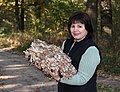 Grifola frondosa
 -
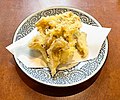 Maitake Mushroom Tempura
 -
 Maitake rice
 -
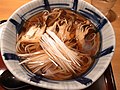 Maitake soba noodle


.jpg)
.jpg)
