Classical mechanics: Difference between revisions
CSV import |
CSV import |
||
| Line 38: | Line 38: | ||
[[Category:Mechanics]] | [[Category:Mechanics]] | ||
{{physics-stub}} | {{physics-stub}} | ||
<gallery> | |||
File:Orbital_motion.gif|Orbital motion | |||
File:Tir_parabòlic.svg|Parabolic trajectory | |||
File:Modernphysicsfields_2.svg|Modern physics fields | |||
File:Theory_of_impetus.svg|Theory of impetus | |||
File:Portrait_of_Sir_Isaac_Newton,_1689.jpg|Portrait of Sir Isaac Newton, 1689 | |||
File:Joseph_Louis_Lagrange2.jpg|Joseph Louis Lagrange | |||
File:WilliamRowanHamilton.jpeg|William Rowan Hamilton | |||
</gallery> | |||
Latest revision as of 11:11, 18 February 2025
Classical mechanics is a branch of physics that deals with the motion of bodies under the influence of forces. This field of study is often referred to as the "Newtonian mechanics" after Isaac Newton, whose laws of motion and universal gravitation laid the foundation for this subject.
History[edit]
The history of classical mechanics is intertwined with the history of mathematics and natural philosophy. The ancient Greeks, particularly Aristotle, made significant contributions to the understanding of motion and force. However, it was not until the 17th century that Isaac Newton formulated the laws of motion and universal gravitation, which form the basis of classical mechanics.
Principles[edit]
Classical mechanics is based on a few fundamental principles, including Newton's laws of motion, the principle of conservation of energy, and the principle of conservation of momentum. These principles provide a framework for predicting the motion of objects under a variety of conditions.
Newton's Laws of Motion[edit]
Newton's laws of motion are three physical laws that form the foundation for classical mechanics. They describe the relationship between a body and the forces acting upon it, and its motion in response to those forces.
Conservation of Energy[edit]
The principle of conservation of energy states that the total energy of an isolated system remains constant. This principle is a fundamental concept in physics and is particularly useful in solving problems in classical mechanics.
Conservation of Momentum[edit]
The principle of conservation of momentum states that the total momentum of a system of particles is constant, provided that no external forces are acting on it. This principle is also a fundamental concept in physics and is used extensively in classical mechanics.
Applications[edit]
Classical mechanics has a wide range of applications, from celestial mechanics, which studies the motion of celestial bodies, to engineering, where it is used to design and analyze the movement of machinery and structures.
See Also[edit]
References[edit]
<references />

-
 Orbital motion
 -
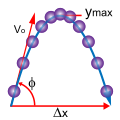 Parabolic trajectory
 -
 Modern physics fields
 -
 Theory of impetus
 -
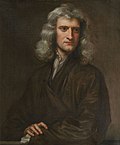 Portrait of Sir Isaac Newton, 1689
 -
 Joseph Louis Lagrange
 -
 William Rowan Hamilton


