Animal communication: Difference between revisions
CSV import Tags: mobile edit mobile web edit |
CSV import |
||
| Line 32: | Line 32: | ||
[[Category:Zoology]] | [[Category:Zoology]] | ||
{{animal-stub}} | {{animal-stub}} | ||
<gallery> | |||
File:Killer_Whales_Hunting_a_Seal.jpg|Killer whales hunting a seal | |||
File:Birdsinging03182006.JPG|Bird singing | |||
File:Groundhog-Standing2.jpg|Groundhog standing | |||
File:Panthera_tigris_altaica_Flehmen_Zoo_Leipzig_2013.jpg|Tiger displaying flehmen response | |||
File:Sniffing_fur.jpg|Animal sniffing fur | |||
File:The_Pit_Organs_of_Two_Different_Snakes.jpg|The pit organs of two different snakes | |||
File:Expression_of_the_Emotions_Figure_4.png|Expression of the Emotions Figure 4 | |||
File:Expression_of_the_Emotions_Figure_5.png|Expression of the Emotions Figure 5 | |||
File:Expression_of_the_Emotions_Figure_6.png|Expression of the Emotions Figure 6 | |||
File:Expression_of_the_Emotions_Figure_7.png|Expression of the Emotions Figure 7 | |||
File:Expression_of_the_Emotions_Figure_8.png|Expression of the Emotions Figure 8 | |||
File:Prairie_dog_Theodore_Roosevelt_NP_ND1.jpg|Prairie dog at Theodore Roosevelt National Park | |||
</gallery> | |||
Latest revision as of 12:13, 18 February 2025
Animal Communication is the transfer of information from one animal to another through a variety of signals such as vocalizations, visual cues, and chemical signals. This form of communication is essential for a variety of animal behaviors including finding food, avoiding predators, and mating.
Overview[edit]
Animal communication involves the transmission of a signal from a sender to a receiver. The sender is the individual animal that produces the signal, and the receiver is the individual animal that responds to the signal. Signals can be intentional or unintentional and can include a wide range of behaviors and physical characteristics.
Types of Animal Communication[edit]
There are several types of animal communication, including auditory communication, visual communication, tactile communication, and chemical communication.
Auditory Communication[edit]
Auditory communication is the use of sound to communicate. This can include vocalizations such as bird songs or wolf howls, as well as non-vocal sounds such as the drumming of a woodpecker or the buzzing of a bee.
Visual Communication[edit]
Visual communication involves the use of visual signals to communicate. This can include coloration, body posture, and movement. For example, a peacock's tail display is a form of visual communication used in mating rituals.
Tactile Communication[edit]
Tactile communication involves the use of touch to communicate. This can include grooming behaviors, nuzzling, or other forms of physical contact.
Chemical Communication[edit]
Chemical communication involves the use of chemical signals, or pheromones, to communicate. These signals can be used to mark territory, signal readiness to mate, or warn of danger.
Function and Importance[edit]
Animal communication is essential for survival and reproduction. It allows animals to locate food and mates, avoid predators, and coordinate group behaviors. Understanding animal communication can also provide insights into animal cognition, social structure, and evolution.
See Also[edit]
.png)
-
 Killer whales hunting a seal
 -
 Bird singing
 -
 Groundhog standing
 -
 Tiger displaying flehmen response
 -
 Animal sniffing fur
 -
 The pit organs of two different snakes
 -
 Expression of the Emotions Figure 4
 -
 Expression of the Emotions Figure 5
 -
 Expression of the Emotions Figure 6
 -
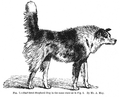 Expression of the Emotions Figure 7
 -
 Expression of the Emotions Figure 8
 -
 Prairie dog at Theodore Roosevelt National Park


