Pond: Difference between revisions
CSV import |
CSV import |
||
| Line 27: | Line 27: | ||
[[Category:Freshwater ecology]] | [[Category:Freshwater ecology]] | ||
{{Water-stub}} | {{Water-stub}} | ||
<gallery> | |||
File:Cornjum,_Martenastate_010.jpg|Pond | |||
File:Early_Pond.jpg|Pond | |||
File:Central_City_Park,_pond,_circa_1877_-_DPLA_-_cc8aa37aab5110ef47c1df80638969a5.jpeg|Pond | |||
File:Parque_Nacional_dos_Lençóis_Maranhenses_Ilse_Klasing_Sparovek_(3).jpg|Pond | |||
File:Central_Park,_The_Pond,_July_30_2020_06.jpg|Pond | |||
File:Mono_Lake_South_Tufa_August_2013_012.jpg|Pond | |||
File:Niagara_Falls_Garden_2005.JPG|Pond | |||
File:Staw_naturalny.JPG|Pond | |||
File:A_pond_image.jpg|Pond | |||
File:Siddha_Pokhari_(Ta_Pukhu_),_Bhaktapur4.jpg|Pond | |||
File:Still_Pond_2,_Isabella_Plantation,_Richmond_Park,_London,_UK_-_Diliff.jpg|Pond | |||
File:Young_pumpkinseed_sunfish.jpg|Pond | |||
</gallery> | |||
Latest revision as of 11:54, 18 February 2025
Pond
A Pond is a body of water, smaller than a lake. They are typically shallow enough to support rooted plants at all depths. Ponds can occur naturally or can be human-made through a variety of methods.
Formation[edit]
Natural ponds can form from a variety of geological and environmental processes. They can be created by glacial activity, landslides, sinkholes, or other natural events. Human-made ponds are often created for agricultural purposes, for aesthetic or recreational purposes, or as part of a water treatment process.
Ecology[edit]
The ecology of a pond is complex and can include a wide variety of organisms, from microbes to plants to animals. The presence of these organisms can be influenced by factors such as water temperature, light levels, and nutrient availability.
Flora and Fauna[edit]
Ponds are home to a diverse range of flora and fauna. This can include various species of fish, amphibians, insects, and birds, as well as a variety of aquatic plants. The specific species present can vary greatly depending on the location and conditions of the pond.
Human Use[edit]
Ponds have been used by humans for a variety of purposes throughout history. They have been used for irrigation, fish farming, and water storage. In more recent times, they have also been used for recreational purposes, such as swimming and fishing, and for aesthetic purposes in landscaping and garden design.
Conservation[edit]
The conservation of ponds is important for maintaining biodiversity. Many species rely on ponds for their survival, and the loss of ponds can have a significant impact on local ecosystems. Conservation efforts can include measures such as the protection of existing ponds, the creation of new ponds, and the restoration of degraded ponds.

This article is a water supply–related stub. You can help WikiMD by expanding it!
-
 Pond
Pond -
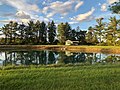 Pond
Pond -
 Pond
Pond -
 Pond
Pond -
 Pond
Pond -
 Pond
Pond -
 Pond
Pond -
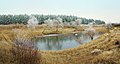 Pond
Pond -
 Pond
Pond -
 Pond
Pond -
 Pond
Pond -
 Pond
Pond


.jpg)


,_Bhaktapur4.jpg)


