Pinacidil: Difference between revisions
CSV import |
CSV import |
||
| Line 24: | Line 24: | ||
{{Pharma-stub}} | {{Pharma-stub}} | ||
{{Medicine-stub}} | {{Medicine-stub}} | ||
<gallery> | |||
File:Pinacidil_structure.svg|Structure of Pinacidil | |||
File:Pinacidil_synthesis.svg|Synthesis of Pinacidil | |||
</gallery> | |||
Latest revision as of 01:51, 17 February 2025
Pinacidil is a vasodilator that works by opening potassium channels in the smooth muscle of the blood vessels, leading to relaxation and dilation of the vessels. This results in a decrease in blood pressure. It is primarily used in the treatment of hypertension.
Mechanism of Action[edit]
Pinacidil is classified as a potassium channel opener. It works by increasing the permeability of the cell membrane to potassium ions, which leads to hyperpolarization of the cell membrane and relaxation of the smooth muscle cells in the blood vessels. This results in vasodilation and a decrease in blood pressure.
Clinical Uses[edit]
Pinacidil is primarily used in the treatment of hypertension. It can be used alone or in combination with other antihypertensive agents. It is particularly useful in patients who have not responded to other treatments. In addition to its use in hypertension, pinacidil has also been investigated for potential use in other conditions such as angina pectoris, heart failure, and asthma.
Side Effects[edit]
Like all medications, pinacidil can cause side effects. The most common side effects are related to its vasodilatory action and include headache, flushing, and dizziness. Less common side effects include palpitations, chest pain, and shortness of breath. In rare cases, pinacidil can cause serious side effects such as hypotension, tachycardia, and heart failure.
Contraindications[edit]
Pinacidil is contraindicated in patients with known hypersensitivity to the drug. It is also contraindicated in patients with severe heart failure, severe coronary artery disease, and in those with a history of myocardial infarction.
Drug Interactions[edit]
Pinacidil can interact with other medications, including other antihypertensive agents, diuretics, and cardiac glycosides. These interactions can lead to an additive effect on blood pressure and increase the risk of hypotension.
Pharmacokinetics[edit]
Pinacidil is well absorbed after oral administration and undergoes extensive first-pass metabolism in the liver. It is primarily excreted in the urine as metabolites.


-
 Structure of Pinacidil
 -
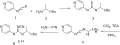 Synthesis of Pinacidil


