Para-Chloroamphetamine: Difference between revisions
CSV import |
CSV import |
||
| Line 28: | Line 28: | ||
{{Pharma-stub}} | {{Pharma-stub}} | ||
{{Psychoactive drug-stub}} | {{Psychoactive drug-stub}} | ||
<gallery> | |||
File:para-Chloroamphetamine Structure.svg|Para-Chloroamphetamine | |||
File:4-CA44.jpg|Para-Chloroamphetamine | |||
</gallery> | |||
Latest revision as of 01:08, 20 February 2025
Para-Chloroamphetamine (PCA), also known as 4-Chloroamphetamine, is a psychoactive drug and research chemical of the amphetamine class that has been sold online as a designer drug. It is a serotonin neurotoxin and suspected carcinogen.
History[edit]
PCA was first synthesized in the early 1960s by a team of scientists at Hoffmann-La Roche, a Swiss multinational healthcare company. It was initially developed as a potential antidepressant medication, but its severe neurotoxic effects led to its discontinuation.
Pharmacology[edit]
PCA acts as a potent and selective serotonin releasing agent (SRA) with weak effects on dopamine and norepinephrine transporters. It is known to be a powerful neurotoxin, selectively damaging or destroying serotonin neurons in the brain, which can lead to a variety of serious complications including depression, anxiety, and cognitive impairment.
Effects[edit]
The effects of PCA can vary greatly depending on the dose and the individual's physiology. At low doses, it can produce mild stimulant effects similar to those of other amphetamines. However, at higher doses, it can cause severe neurotoxicity, leading to long-term damage to the brain's serotonin system.
Legal Status[edit]
PCA is classified as a Schedule I controlled substance in the United States, meaning it is illegal to manufacture, distribute, or possess without a license from the Drug Enforcement Administration (DEA). It is also controlled under similar laws in many other countries.
See Also[edit]
References[edit]
<references />

This article is a Psychoactive drug-related stub. You can help WikiMD by expanding it!
-
 Para-Chloroamphetamine
 -
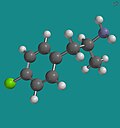 Para-Chloroamphetamine


