Membrane progesterone receptor: Difference between revisions
CSV import |
CSV import |
||
| Line 30: | Line 30: | ||
{{gene-stub}} | {{gene-stub}} | ||
{{medicine-stub}} | {{medicine-stub}} | ||
<gallery> | |||
File:Membrane-progesterone-receptor-alpha.png|Membrane progesterone receptor alpha | |||
File:Membrane-progesterone-receptor-beta.png|Membrane progesterone receptor beta | |||
File:Membrane-progesterone-receptor-gamma.png|Membrane progesterone receptor gamma | |||
File:Membrane-progesterone-receptor-delta.png|Membrane progesterone receptor delta | |||
File:Membrane-progesterone-receptor-epsilon.png|Membrane progesterone receptor epsilon | |||
File:Mpr_pathway_example.png|Membrane progesterone receptor pathway example | |||
</gallery> | |||
Revision as of 11:36, 18 February 2025
Membrane progesterone receptor (mPR) is a protein that in humans is encoded by the PAQR7 gene. mPR is a member of the progesterone receptor family, which is a group of proteins that are activated by the steroid hormone progesterone.
Function
The primary function of the membrane progesterone receptor is to mediate the effects of progesterone, which is a hormone that plays important roles in the menstrual cycle, pregnancy, and embryogenesis of humans and other species. mPR is a G protein-coupled receptor that activates a second messenger system to initiate a complex series of events within the cell.
Structure
The structure of mPR is characterized by seven transmembrane domains, which is a common feature of G protein-coupled receptors. The receptor is located in the cell membrane, where it binds to progesterone.
Clinical significance
Alterations in the function of the membrane progesterone receptor can lead to a variety of health conditions. For example, reduced activity of mPR has been associated with premenstrual syndrome and infertility. Conversely, increased activity of mPR has been linked to the development of certain types of breast cancer and endometrial cancer.
See also
References
<references group="" responsive="1"></references>


-
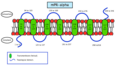 Membrane progesterone receptor alpha
 -
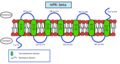 Membrane progesterone receptor beta
 -
 Membrane progesterone receptor gamma
 -
Membrane progesterone receptor delta
-
Membrane progesterone receptor epsilon
-
 Membrane progesterone receptor pathway example


