Şambali: Difference between revisions
CSV import Tags: mobile edit mobile web edit |
CSV import |
||
| Line 27: | Line 27: | ||
{{Turkish-dessert-stub}} | {{Turkish-dessert-stub}} | ||
{{food-stub}} | {{food-stub}} | ||
<gallery> | |||
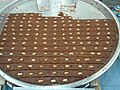
File:Şambali.jpg|Şambali | |||
</gallery> | |||
Latest revision as of 21:15, 20 February 2025
Şambali or Şam tatlısı is a traditional Turkish dessert originating from the Şanlıurfa region of Turkey. It is a type of semolina cake soaked in syrup, similar to basbousa in Arab cuisine.
History[edit]
The name Şambali is derived from the word "Şam", the Turkish name for Syria, indicating its possible origins in the Middle East. However, the exact history of Şambali is not well-documented, and it is widely considered a part of the rich culinary tradition of the Şanlıurfa region.
Preparation[edit]
Şambali is made by mixing semolina, sugar, yogurt, and eggs to form a batter. This batter is then spread in a tray and baked until golden brown. After baking, a syrup made from sugar and water is poured over the cake, allowing it to soak in and sweeten the dessert. The cake is typically cut into squares or diamonds before serving.
In some variations of the recipe, additional ingredients such as coconut, lemon zest, or rose water may be added to the batter for extra flavor. The dessert is often garnished with ground cinnamon or pistachio nuts.
Cultural Significance[edit]
Şambali is a popular dessert in Turkey, especially during the month of Ramadan, when it is often served at Iftar meals. It is also commonly sold by street vendors in Istanbul and other major cities.
See Also[edit]
This article is a Turkish dessert stub. You can help WikiMD by expanding it!

-
 Şambali

