Russian tea culture: Difference between revisions
CSV import Tags: mobile edit mobile web edit |
CSV import |
||
| Line 22: | Line 22: | ||
{{Russian-culture-stub}} | {{Russian-culture-stub}} | ||
{{food-stub}} | {{food-stub}} | ||
<gallery> | |||
File:Kustodiev_Merchants_Wife.jpg|Kustodiev Merchants Wife | |||
File:Чаепитие_в_Мытищах,_близ_Москвы.jpg|Чаепитие в Мытищах, близ Москвы | |||
File:Russiantea1.jpg|Russiantea1 | |||
File:Gorskii_03992u.jpg|Gorskii 03992u | |||
File:Samovar.silver.jpg|Samovar silver | |||
File:Podstakannik_mit_Gold.JPG|Podstakannik mit Gold | |||
File:Family_portrait_by_T.Myagkov.jpg|Family portrait by T. Myagkov | |||
File:Калмыцкий_чай_01.jpg|Калмыцкий чай 01 | |||
</gallery> | |||
Latest revision as of 11:55, 25 February 2025
Russian Tea Culture refers to the traditional methods of preparation and consumption of tea in Russia. The practice has a rich history, with unique customs and brewing techniques that have evolved over centuries.
History[edit]
The history of tea in Russia can be traced back to the 17th century, when it was first introduced to the country from China. The initial reception was lukewarm, but by the 19th century, tea had become a significant part of Russian culture. The Samovar, a traditional Russian tea kettle, became a symbol of hospitality and comfort.
Tea Types and Preparation[edit]
Russian tea culture is characterized by the consumption of two types of tea: black and green. The most popular black tea is the Russian Caravan, a strong blend often smoked with pine to give it a unique flavor. Green tea is less common but still enjoyed by many Russians.
Tea preparation in Russia is a unique process. The tea is brewed in a small pot known as a Zavarka. The tea is then served in a cup, diluted with hot water from the Samovar to the drinker's taste.
Tea Drinking Customs[edit]
Tea drinking in Russia is a social event and is often accompanied by a variety of snacks and sweets. It is common to serve tea with lemon, honey, or jam. In some regions, it is also customary to drink tea with a cube of sugar held between the teeth.
Tea Ceremonies[edit]
Russian tea ceremonies, known as Chayepitiye, are a formal way of preparing and serving tea. These ceremonies are often conducted during special occasions and involve a specific set of rules and rituals.
Influence on Society[edit]
The Russian tea culture has had a significant influence on the country's society and traditions. It has shaped social norms, influenced literature and art, and played a role in the country's economic development.
 | This Russian culture article is a stub. You can help Wikipedia by adding missing information. |

-
 Kustodiev Merchants Wife
 -
 Чаепитие в Мытищах, близ Москвы
 -
 Russiantea1
 -
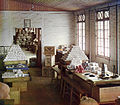 Gorskii 03992u
 -
 Samovar silver
 -
 Podstakannik mit Gold
 -
 Family portrait by T. Myagkov
 -
 Калмыцкий чай 01


